
Roman funerary ritual in rural Italy (Corinaldo, AN): an integrated approach between anthropology and archaeology to trace lifecycle and biological sex differences from an ongoing excavation.
Claudia Moro1, 3, Enrico Zampieri2, Lucie Biehler-Gomez2, Federica Boschi2, Cristina Cattaneo1
1 LABANOF, Laboratorio di Antropologia e Odontologia Forense, sezione di Medicina Legale, Dipartimento di Scienze Biomediche per la Salute, Università degli studi di Milano, Milan, Italy
2 Dipartimento di Storia Culture Civiltà, Università di Bologna, Bologna, Italy
3 Dottorato in Scienze Ambientali, Università degli Studi di Milano, Italy
*Corresponding author: claudia.moro@unimi.it
Abstract
The integration of bioanthropology and funerary archaeology to investigate the life course, biological sex, and their representation in funerary contexts is applied to the study of the rural Roman necropolis of Contrada Nevola (I-IV AD; Corinaldo, Italy). Bioarchaeological data are integrated with the spatial distribution of tombs, grave goods, and burial types to assess how funerary practices were influenced by biological sex and age at death.
The assemblage comprises 88 individuals, including 21 females and 28 males, divided into social age groups based on the life course reported by ancient sources (females: infantia, pueritia, fertility, fertility decline, menopause; males: infantia, pueritia, adulescentia, iuvenes, seniores, senes). Statistical analyses included Fisher’s exact tests and Kaplan–Meier survival analysis.
Age-at-death was similar between the sexes; however, the distribution of mechanical stress markers differed, with males showing a higher frequency and a more uneven distribution. Female burials displayed greater complexity, particularly at older ages, whereas the opposite trend was observed among males.
These findings suggest a sex-based differentiation in funerary representation, possibly related to social roles. Males appear more involved in mechanically strenuous activities, and the greater complexity of younger male burials may indicate early social recognition tied to productive and economic contributions. Conversely, the pattern observed in female burials may reflect evolving social roles and embodied family status, particularly following motherhood and widowhood.
Overall, the results highlight how social identities were symbolically constructed and expressed through burial practices, shaped by both Roman cultural norms and local socio-economic dynamics. These findings remain preliminary, as the necropolis is still under excavation and a precise chronology has not yet been established for all tombs; however, an expanded dataset may confirm the trends proposed here.
Keywords: bioarcheology, funerary ritual, rural necropolis, Italy
Introduction
Understanding of the rituals surrounding death and burial can offer valuable insights into a society’s approach toward death and the afterlife as well as into the social consideration of individuals by biological sex and age. In the context of the Roman world, knowledge of burial practices and commemorative rituals is primarily drawn from ancient literary sources authored by elite male members of Roman society, who focused on the funerary customs of the aristocracy. Archeology can, therefore, provide a valuable source to examine and understand the funerary practices of “common people”. Within this framework, questions concerning lifecycle, biological sex, and their representation in funerary contexts have received comparatively little attention in Roman studies.
Roman society was highly stratified, with a rigid hierarchy largely determined by economic wealth (Horatius, Satire I, 1,62; Petronius, Satyricon, 77). At the top stood the Patricians and Equites, who controlled most of the wealth and dominated the financial and commercial sectors (Duncan-Jones, 2016). The so-called “middle class” was more diverse, encompassing affluent landowners, urban merchants, and other professionals. At the base of the social pyramid were the slaves, legally considered property and devoid of rights, who formed the backbone of the Roman economy, by working in agriculture, domestic service, and skilled trades (Peachin, 2011). The contours of this social structure, as also conveyed by written sources, were likely more blurred in practice, encompassing individuals who occupied intermediate positions between the groups mentioned. In the countryside, a similar social structure likely prevailed. Large estates were owned by wealthy landowners and operated by a mix of free peasants, tenant farmers, and slaves. Rural settlements, ranging from isolated villae to more organized vici (villages), were often economically and socially connected to nearby urban centers (Dyson, 1992; Kehoe, 2007).
During the Roman Imperial Era, social roles were also shaped by biological sex and gender (Cicero, Pro Munera, 12, 27; Livius, Ad Urbe Condita, 34, 2, 11). Men were primarily active in the public sphere, dominating politics, religion, law, military service, and commerce. Within the household, they held the role of paterfamilias (male head of the family), which granted them full authority and responsibility over all family members (Harlow & Laurence, 2002). In contrast, women were largely restricted to the domestic sphere. Their responsibilities centered on managing the household, raising children, and overseeing domestic slaves (Hemelrijk, 2020). Legally, women were subordinate to men—first to their fathers, then to their husbands—and were excluded from voting or holding public office. However, women from wealthier families enjoyed greater privileges as they could participate in social and religious life and even engage in business activities, though always under the legal supervision of a male guardian (Harlow, 2007).
In a hierarchical society (such as the Roman one), the physiological process of ageing also determined social status and, therefore, age cannot be considered as the simple passing of time. The social impact of aging, described in a dichotomous key by ancient authors (Giovenale, Satire VI; Seneca, Epistulae, 12, 4) was explored through life course theory (Gowland, 2002, 2007; Joyce, 2000; Meskell, 2000; Sofaer Derevenski, 2000; Stoodley, 2000). In Roman times, the lives of people were marked by well-defined stages, named gradus aetatis (stages of life), generally linked to the cursus honorum (career path of public officers) and military career for men, while women’s lives were more closely tied to biological changes (Gilchrist, 2000; Ginn & Arber, 1995; Harlow & Laurence, 2002; Sofaer Derevenski, 2000). This temporal division of the lifecycle has been described in poetic, moralistic, and descriptive terms. Among those who mention it are Ovid (Metamorphoses, XV, 199-213), who compared the stages of life to the changing seasons, and Cicero (Cato Maior de Senectute, X, 33), who admonished those who regretted the passing of their youth. Ancient written sources provided a temporal division for each life stage, and although there are slight differences between authors, a clear consistency can be observed across the various texts (Fayer, 2016, p. 11). Specifically, Censorinus (De die natalis, XIV, 1-2) offered the following division: pueri, from 0 to 14 years, which coincides with the replacement of the deciduous teeth (Dixon, 2001; Rawson, 2003); adulescentes, from 15 to 30 years; iuvenes, from 31 to 45 years; seniores, from 46 to 60 years; senes, from 61 until death. Servius, in his commentary on the Aeneid (V, 295), mentioned the following age groups: infantia, pueritia, adulescentia, iuventa, senecta, without specifying the duration of each. In contrast, Isidore of Seville’s divisions included: infantia, from 0 to 6 years; pueritia, from 7 to 14 years; adolescentia, from 15 to 28 years; iuventus, from 29 to 50 years; gravitas, from 51 to 70 years; and senectus. The lives of women, on the other hand, were marked by the changes in their fertility, from the onset of menarche to menopause (Cokayne, 2003; Fraschetti, 1998; Harlow, 2007). It should be noted that these divisions of life stages may reflect the differing social, cultural, and historical contexts of the authors, given that several centuries separate figures such as Censorinus, Servius, and Isidore of Seville. Moreover, the age categorizations reported in historical sources reveal a pronounced disproportion between males and females. Women’s life course appears largely determined by biological factors, resulting in broader and less clearly defined age classes. The underlying message conveyed is that women’s social roles are closely tied to their reproductive cycle and predominantly linked to the domestic sphere. Consequently, there is a convergence between women’s social and domestic roles, which tends to flatten the nuances of the life course that, by contrast, characterize male experiences.
The biological age-at-death estimated by anthropological analysis is translated into a chronological age range to interpret social age. Two terms are frequently used in this field: life course and lifecycle. The first is determined by cultural and social structures, representing the perception of chronological age among the members of a community. The life course encapsulates three different perceptions of ageing: biological, social, and chronological (Gowland, 2007), which are all linked one another. The second, instead, is related to the natural changes experienced by every human being (Harlow, 2007). The age groups of the present study were divided trying to emulate the life course of the Roman citizens through biological age estimations on human remains.
An increasing interest in “sex” as a variable affecting funerary practice started since the advent of New Archeology theories (Binford, 1972; R. Chapman et al., 1981; Tainter & Schiffer, 1978). This led to the comparison between males and females’ burials based on the differences in typology and quantity of grave goods, and in grave structure. Concurrently with the emergence of post-processual archaeology and the development of gender and feminist theories, a critical reassessment of the concepts of sex and gender has also begun to influence the study of necropolises (Bertelsen & Arkeologisk Museum, 1987; Kus, 2013). With the advancement and acceptance of bioarchaeological methods for estimating biological sex in archaeology, studies of funerary practices have come to increasingly depend on osteological analyses to strengthen interpretative frameworks (Sofaer, 2006; Sørensen, 2000). Following this path, male and female roles in antiquity are now also interpreted through the lens of historical and social constructs, and therefore cannot be rigidly or definitively tied to biological sex (Sørensen, 2000). In the funerary context, an individual’s biological sex is determined through anthropological analysis, while the type and arrangement of grave goods can provide valuable insights into the recognition of gender. However, this connection must be interpreted critically, as it is not straightforward (Whitehouse, 2002). The relationship between biological sex and gender is complex and culturally determined, and the sex of the skeleton can be considered purely ‘biological’ only in relation to sexually dimorphic traits (i.e., morphometric methods for sex estimation). This is because bone physiology can also be modified by socially constructed aspects of gender. For instance, differential access to resources or the performance of distinct occupational activities can affect the skeletons of males and females in different ways. The human skeleton is in the center between nature and culture, acting both as social subject and object (Sofaer, 2006).
Some particularly illustrative examples are provided by Barbiera (2007), who has worked on Longobard cemeteries, Sullivan (2005) in the study on cribra orbitalia distribution and Biehler-Gomez (2024) for females’ biological condition in Italy. The analysis of biological sex status cannot be isolated from the contextual ‘social status’ (e.g., Robbs, 2019).
From an archaeological perspective, funerary practices are the most representative context for lifecourse differences. Indeed, the funerary practices of a society often encapsulate its social norms and expectations relating to age and gender, which are created, expressed and reinforced through artefacts (Derevenski, 1997; Gilchrist, 2000, p. 325; Sofaer Derevenski, 2000).
Research aim
This study aims to analyze how lifecycle and biological sex impacted the funerary rituals of a rural Italian context. Specifically, we investigate whether an individual’s social “role”, tied to their age and sex, is reflected in their burial characteristics (grave goods, tomb structure, body disposition, and location within the necropolis). Despite the integrative approach proposed, a central role will be covered by bioarcheological analysis, which contribute remain substantial as a reliable source to evaluate sex and age-at-death, along with lifestyle.
Archaeological Context
The assemblage consists of 88 tombs from the rural necropolis of Contrada Nevola in Corinaldo, located in the central part of the Italian peninsula along the Adriatic coast. Based on the Augustan territorial divisions, the necropolis falls within the boundaries of Regio VI (Ager Gallicus), corresponding to the present-day Marche region (Boschi, Giorgi, et al., 2020). The Roman occupation phase represented in our sample dates to the Imperial period (late 1st to early 4th century AD) and is associated with a presumed local vicus, yet to be located. The necropolis itself was established on a site with a long funerary history, as indicated by the discovery of pre-Roman burial mounds (Boschi, 2020, 2022; Boschi, Venanzoni, et al., 2020). Archaeological excavations are currently ongoing and are under the direction of the Department of History and Cultures of the University of Bologna, with a concession from the Ministry of Culture (MIC) and in collaboration with the Soprintendenza for the provinces of Ancona and Pesaro-Urbino.
Assemblage and Method
The location and typology of grave goods, the orientation of the skeleton and its archeothanatological characteristics, the burial structure, the topographical disposition, and the biological profile of the individuals were analyzed. Specifically:
- the typology (pottery, coins, personal ornaments) and location of the grave goods in the tomb (outside the limit of the tomb, close to the cranium, close to the thorax) were recorded;
- the spatial arrangement of the tombs within the necropolis was analyzed to determine whether they were organized into clusters based on biological sex or age at death;
- upper and lower limbs were classified as stretched or bent;
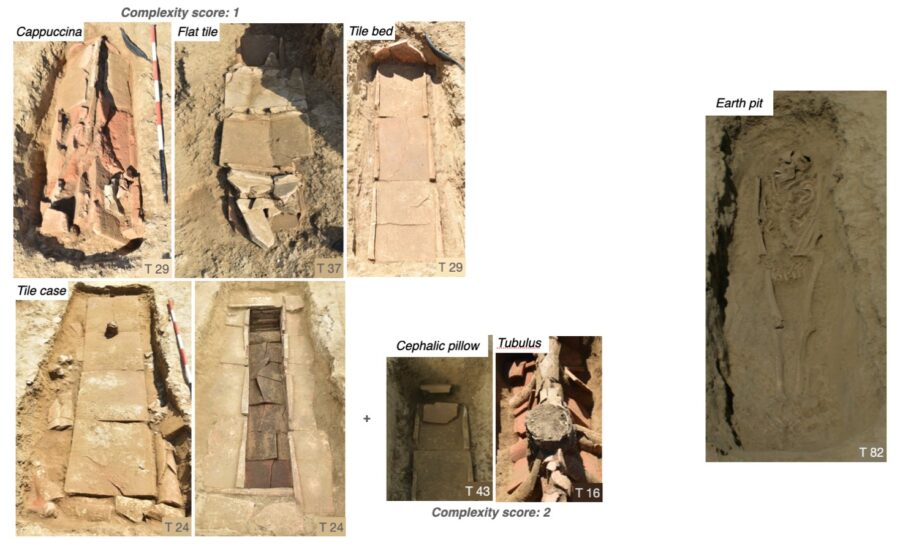
- the burial typology was classified in two groups: earth pit and built structure (cappuccina type, case). For the latter category, the presence of accessorial elements (i.e., tubulus, cephalic pillow) was also recorded to score the “complexity” of the burial. In the necropolis, the following types of burials were recorded (Boschi et al., 2022): cappuccina (both the classical type and the variant with flat covering tile), earth pit, tile case, and tile bed (Fig. 1).
- data regarding biological sex, age-at-death, stature, and paleopathological conditions were obtained using the following standards, as macroscopic methods with a proven accuracy (Brooks & Suchey, 1990; Buikstra, 2019; Lovejoy et al., 1985; Phenice, 1969; Rougé-Maillart et al., 2009; Scheuer & Black, 2004; Trotter, 1970; Ubelaker & Buikstra, 1994; Walker, 2005, 2008). Males were grouped into five categories based on age at death: pueritia (7–14 years), adulescentia (15–30 years), iuvenes (31–45 years), seniores (46–60 years) and senes (61+ years), as described in historical sources (e.g. Censorinus and Cicero). The categorization of females, whose life course is marked by their biological changes, considered the phases of fertility (pueritia: 7–14 years; period of fertility: 15–30 years; decrease of fertility: 31–45 years; non-fertile females: 46+ years) (Crawford & Steiner, 2015). Subadults and individuals of undetermined sex were classified in infantia: 0-6 years, pueritia: 7-14 years, adulescentia: 15-30 years, adult of undetermined age, subadult of undetermined age, individuals of undetermined age-at-death. Two classes of stress markers were analyzed: mechanical (i.e., Schmorl’s nodes, enthesopaties, osteoarthosis) and non-mechanical (enamel hypoplasia, cribriotic lesions, porotic hyperostosis) (Brickley, 2018; Dar et al., 2010; Goodman, 1996; Larsen, 2015; Mariotti et al., 2007).
Fisher’s exact tests were performed to test the presence of correlation between grave goods or type of grave structure and biological sex or age-at-death. Kaplan-Meier survival analyses were conducted for males and females. Statistical analyses were performed using SPSS software (v. 30.0.0.0).
Results
Grave goods
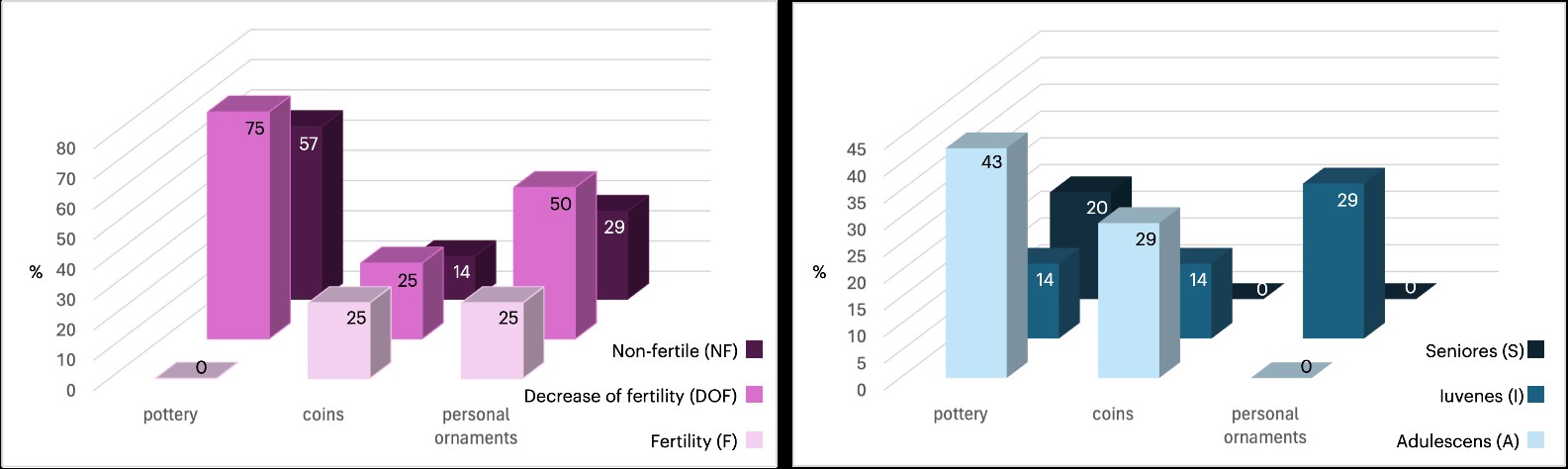
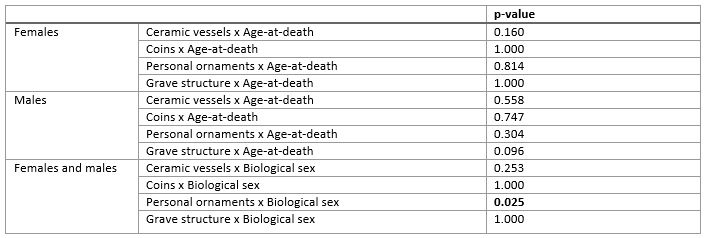
Of the 88 tombs analyzed, 50 showed at least one grave good. These grave goods were classified into three main categories: ceramic vessels, coins, and personal ornaments (e.g., rings, pins, glass paste beads). Pottery was the most frequent object (n=33 tombs, 33.6%), followed by coins (n=12, 13.4%), and personal ornaments (n=11, 12.3%). Among females, a higher frequency of these items was observed (n=17, 81%), especially after the peak fertility period (Fig. 2). The arrangement of these objects was highly variable, with no consistent pattern. However, for males, ceramics were more frequently placed near the cranium, while coins were positioned closer to the chest (Fig. 2). Conversely to what was observed among females, younger males showed a greater quantity of grave goods compared to the oldest (Fig. 2). However, no correlation between grave goods and biological sex or age-at-death emerged, with the only exception of personal ornaments, which were significantly more frequent among females (Table 1).
Topographical distribution
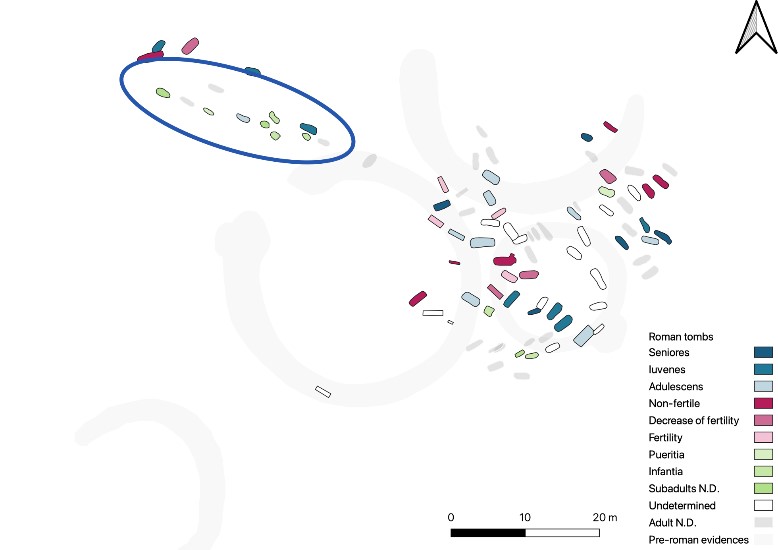
Analyses of the topographical distribution of the tombs, based on sex and age at death, did not reveal the presence of distinct clusters. The only apparent exceptions were burials of juveniles which were concentrated in the northwest portion of the necropolis and shared a consistent orientation (Fig. 4). This absence of clustering might be attributed to chronological factors rather than deliberate ritual choices. The topographic arrangement of the necropolis might reflect either ritual practices, chronological developments, or potentially an internal pathway within the necropolis that has since been lost. However, the possibility that this represents a true burial cluster can only be confirmed through radiocarbon dating.
Archeothanatology
The arrangement of the lower limbs was uniform throughout the necropolis, with almost all individuals showing stretched limbs (n=41, 93%). However, the positioning of the upper limbs was more varied. A higher frequency of individuals with both upper limbs flexed was noted among females who died during their fertile years (n=2, 67%). Only one limb was flexed in the second group (i.e., DOF; n=2, 50%), while in the third group, which consisted of non-fertile females, there was a high frequency of individuals with both limbs extended (n=5, 60%). Among males, extended upper limbs were common among both the youngest (n= 3, 60%) and oldest individuals (n=3, 75%), while in the intermediate age group, the flexion of both limbs was more frequently observed (i.e., iuvenes; n=4, 57%).
Bioarchaeology
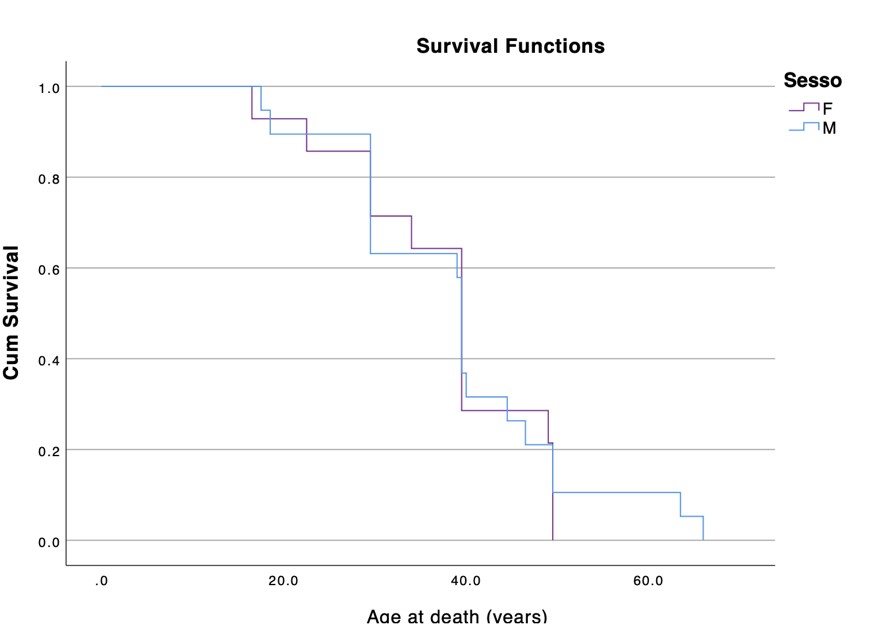
Of the 88 individuals analyzed, sex and age could only be estimated for 49 individuals due to poor state of preservation. Of these, 21 were female and 28 were male. The average age-at-death for both sexes was similar, with 37.6 years for females (standard deviation: 2.76 years) and 38.94 years for males (standard deviation: 2.94 years). Kaplan-Meier survival analyses did not reveal significant differences between the two sexes (Mantel-Cox Log-Rank: 0.786) (Fig. 5).
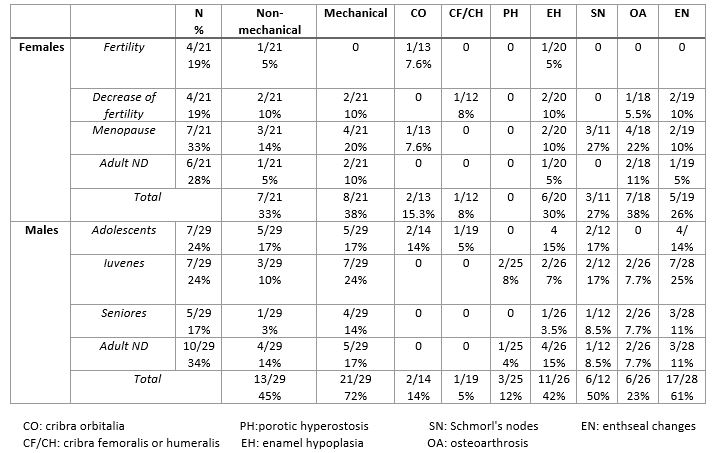
However, differences in stress markers distribution was noted. Among females, mechanical stress markers were more commonly observed (n=8, 38%), especially among non-fertile females (n=4, 20%) (Table 2). The most frequent marker was osteoarthosis (n=7; 33%), followed by enamel hypoplasia (n=6, 30%) and entheseal changes (n=5, 26%).
Mechanical stress markers were also more frequent in the male subsample (n=21, 72%), specifically among the iuvenes (n=7, 24%) (Table 2). The most frequent group of lesions observed was entheseal changes (n=17, 61%), followed by Schmorl’s nodes (n=6, 50%) and enamel hypoplasia (n=11, 42%).
Differences between males and females in non-mechanical stress markers distribution was significant (Fisher test, p=0.013), in favor of males.
The difference in non-mechanical (33%) and mechanical (38%) stress markers frequencies in females was less pronunced than in males (non-mechanical: 45%, mechanical: 72%). While the difference in non-mechanical stress markers between sexes was not significant (Fisher test, p=0.560), a significant result was found for mechinical stress markers (Fisher test, p=0.030).
Discussion
Differences according to biological sex
At least one mechanical stress marker was identified in over half of the male subgroup (72%), indicating a greater involvement in physically demanding activities compared to females (38%, p= 0.030) (Table 2). This pattern has been widely documented in both urban and rural Roman necropoleis (Biehler-Gomez et al., 2025; Catalano et al., 2009, 2010; Minozzi et al., 2012; Üstündağ, 2020), and is supported by ancient literary sources. The principal references for rural labour organization In Roman era include the works of Cato the Elder (De Agricultura), Varro (De Re Rustica), and Columella (De Re Rustica), all of which describe a hierarchical structure in agricultural production. Men were typically engaged in more strenuous tasks, including specialized roles such as olive and vine cultivation or animal husbandry (Lovén, 2025). By contrast, women were primarily involved in indoor activities, largely related to food preparation and textile production, both in rural and urban contexts (Treggiari, 1979). However, Columella (De Re Rustica, 12.3.5–6) indirectly suggested that women could also participate in outdoor agricultural work. The distribution of mechanical stress markers in the present sample indicates that, notwithstanding Columella’s account, females may have been less frequently exposed to mechanically strenuous activities. Moreover, Schmorl’s nodes, osteoarthrosis, and entheseal changes appear more evenly distributed among females than males. This pattern may reflect the higher proportion of senile individuals among females exhibiting mechanical stress markers (who would be expected to show a greater incidence of degenerative conditions) or, alternatively, differences in patterns of physical activity.
The distribution of non-mechanical stress markers is comparable between the two sexes, and no statistically significant difference was detected (Fisher’s exact test, p= 0.560). This pattern may indicate a broadly similar lifestyle for males and females during growth, suggesting a trend that contrasts with what is generally observed in contemporary sites, although some exceptions consistent with the present sample have been reported (Manzi et al., 1999). A more detailed examination of enamel hypoplasia, based on published data (Moro et al., 2025), indicates that these defects most frequently formed between 3 and 4 years of age, with notable frequencies also between 2–3 years and 4–5 years. These age ranges are compatible with the weaning period, as described in ancient medical sources such as Soranus of Ephesus (Gynaecia II, 18–22) and Galen (De sanitate tuenda I, 11–12). The prolonged duration of breastfeeding in the Roman world, together with the introduction of cereal-based supplementary foods, may have affected both nutritional and immunological status, thereby promoting the development of enamel defects (FitzGerald et al., 2006). Overall, males and females appear to have been exposed to similar environmental stressors during early life, leading to the formation of these lesions. The slightly lower frequency of stress markers in the female sample may also be attributable to the phenomenon of biological female buffering. This mechanism, in combination with selective mortality or reduced exposure to occupational mechanical risks, may have influenced the demographic composition of the sample: the proportion of older females (14%) is nearly double that of males (8%), in line with findings from statistically robust studies (Redfern et al., 2015; Speal, 2015). Bioarchaeological analysis therefore suggests the existence of differences in lifestyle between males and females; following evaluation of the funerary archaeological context may help determine whether these differences also reflect underlying social distinctions.
Regarding the distribution of grave goods, the Roman practice to bury a higher frequency of objects in females’ burials is confirmed (Moore, 2010; Stemberger, 2019), with the exception of coins, which may have served the “non-gendered” role of Charon’s obol (Perassi, 2001; Vojvoda & Mikić, 2023) (Giovenale, Satire, 3.190-322). This evidence might suggest that the expression of family status was channeled by females even after death, acting as a showcase for family wealth. In fact, during their life, women’s clothing represented the economic wealth of the family from which they came or into which they had entered through marriage (Olson, 2008). Specifically, jewelry was considered a tangible sign of prestige and honor, and it also played a generational role as it could be inherited or left as a dowry. In a society where women had no direct political power, appearance and public presentation were important ways to exert influence and consolidate the family’s social standing. This same pattern could be rediscovered in burial’s practice and will be maintained for centuries after the decline of the Roman Empire (Barbiera, 2007, 2010; Dalceggio, 2021). Regarding the sample from Contrada Nevola, the higher number of grave goods, including personal ornaments, in the females’ burials could be associated with this social phenomenon. The necropolises of rural settlements seem to maintain the customs usually observed and described in urban contexts, highlighting the spread of the process of romanization and the homogeneity of rituals (Mattingly, 2013; Webster, 2001; Woolf, 1998) as observed, for instance, in England Dorset (Redfern et al., 2015).
Beside this interpretation, which remains hypothetical, the artifacts’ biography, funerary banqueting practices, and the cognitive aspects of the celebrants must be considered. The idea of “divisibility” of social identity in funerary practice highlights the relationship between the elements surrounding the deceased’s body (such as grave goods) and their perceived social role (J. Chapman, 2012). There are, therefore, some aspects of the identity of the deceased that are intentionally preserved or transmitted after death. The ritual practice is a symbolic and performative communication, with a structuralized grammar and vernacular (Nizzo, 2018). It communicates which identity traits are emphasized and how the bond between the living and the dead is constructed. Within this context, every action is imbued with significance that transcends the mere physicality of the objects involved. The Roman funerary ritual can also be interpreted through this theoretical framework, as it follows a standardized modus operandi aimed at “purifying” the deceased, motivated by the fear that they might return among the living.
Differences according to age-at-death
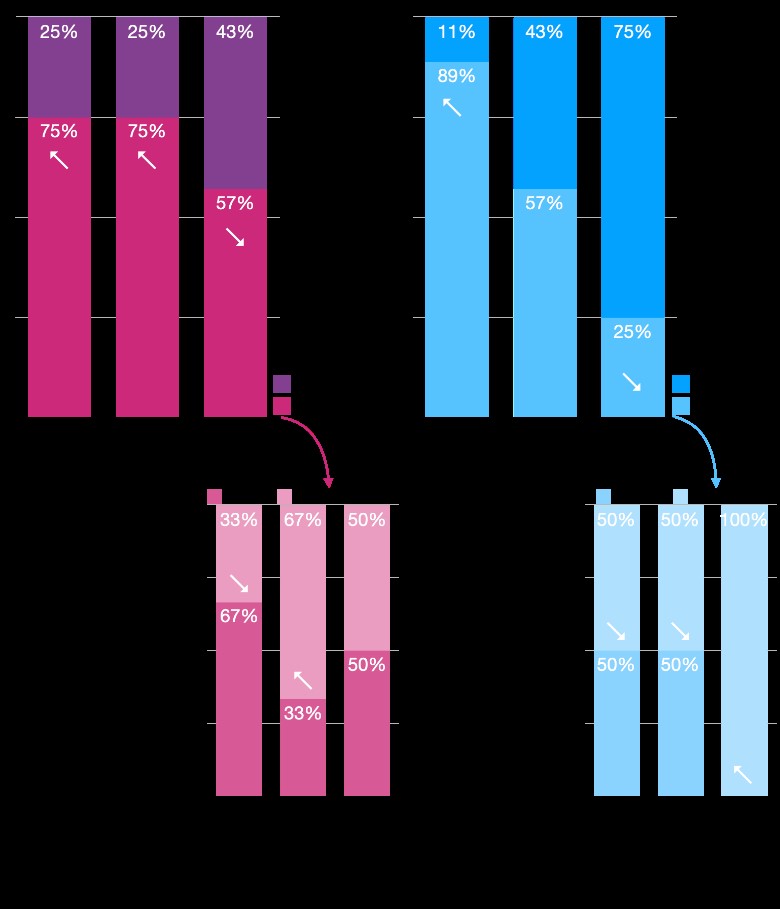
In the female sample, the complexity of the burials increased with age, and a variation on the disposition of upper limbs was also noted. Females deceased during the period of fertility (15-30 years) were commonly buried with both upper limbs bent (67%), and their graves were often built (75%). However, grave goods were sporadically found (Fig. 2). On the other hand, females deceased in the period of decreasing fertility (31-45 years) had the burials with the highest frequency of grave goods, and pottery was commonly found positioned near the thorax. They were commonly buried in tile graves (75%) with a high degree of architectural complexity (67%), and only one bent upper limb (50%). Non-fertile females’ (46+ years) burials were characterized by a higher frequency of pottery (60%), placed near to the cranium, compared to other typologies of grave goods. Their graves were usually built (57%) and the upper limbs were typically stretched (60%). The differences observed among these subgroups suggest that funeral customs for adult females might have been related to their age and social status. A similar result was obtained by Moore (2010): in her study of Roman Britain customs, the author suggests that older females’ grave goods increased in complexity to reflect the consolidation of their status as matronae with a central role in the family, in both urban and rural contexts. However, this practice was not standardized and may reflect context-specific conditions, as suggested by comparison with Gowland’s work (2007), which indicates a decrease in the complexity of burial assemblages for older women. The author argues that a reduction in grave goods should not necessarily be interpreted as a loss of status; rather, it may reflect a shift in the representation of gender in old age.
Considering the role of women described in historical sources, it is likely that the consolidation of a social position was tied to marriage and motherhood (Harlow & Laurence, 2002). The complex, multilayered symbolism behind the representation of an individual’s identity in funerary contexts is hard to determine and understand. During the Middle Ages, females’ gendered identity was clearly reflected by graves good. The female life course was related to biological reproductive phases: the transition from child to woman was marked by an increasing gender-related symbolism (Stoodley, 2000). In Roman England, females deceased between 18-25 years were buried with the highest number of grave goods (Gowland, 2002), showing the opposite trend of our results. In the rural necropolis of Contrada Nevola, it seems that older females (presumably mothers and heads of households) received a more “honorable” funeral treatment in recognition of their role (Rosenthal & Joel, 1990). In their younger years, Roman women’s lives were defined by their domestic roles as daughters, wives, and mothers. However, as they aged, significant life transitions altered their social standing. One such transition was widowhood, which was likely common given that men typically married about a decade later than women (Harlow & Laurence, 2002). This is further supported by the fact that our sample contains more older females than older men. A high rate of widowhood could have elevated women to a more central position within the family, making them the new focus of the household and a source of continuity with the past. The biological end of a woman’s reproductive role at menopause may have also influenced her perceived social identity. While it is difficult to link menopause directly with burial records, the social recognition of the end of fertility is evident. For instance, Augustan marriage laws (specifically, Lex Papia Poppaea, 9 d.C.) did not require women over 50 to remarry, implicitly acknowledging that their childbearing years were over. Transitions like widowhood, having adult children, and the arrival of grandchildren may have freed older women from some social constraints. Simultaneously, these changes could have provided them with new, continuing social roles in rural settings. Rather than becoming less visible, the social identity of an older woman may have become more distinct, a shift that could be reflected in the archaeological burial record.
An opposite pattern is observed within the male subgroup. Among the youngest, there is a notably higher frequency of grave goods (Fig. 2), as well as greater structural complexity in their tile graves (Fig. 3). The positioning of the skeleton, with both upper limbs extended, is prevalent across both adulescens (15-50 years, 60%) and seniors (46-60 years, 75%). The iuvenes (31-45 years) represent the only group in which flexed limbs are more frequent (57%) and personal ornaments are present (29%). However, this group shows a lower frequency of pottery vessels (14%) and coins (14%) compared to the adulescentes (respectively, 43%, 29%). The oldest males were typically buried in simple earth pits (75%) and rarely accompanied by grave goods (Fig. 2 and 3).
Given the clear connection between the site’s agricultural activity and the high incidence of mechanical stress markers in younger males, it is plausible that men’s social roles were closely tied to their economic and subsistence contributions within the rural community. Consequently, the care and ornament observed in the burials of younger individuals may reflect a correlation between their occupational roles and the consolidation of their social standing within the community. Aging likely influenced the social status of men in the Roman world, even though they continued to be integrated within their communities (Revell, 2005). The ideal Roman male identity was rooted in the public sphere, outside the domestic domain, making the surrounding environment—whether urban or rural—a significant factor in shaping perceptions of old age (Parkin, 2004). Funerary evidence suggests a shift in the way elderly rural males were regarded: the reduced variety of grave goods associated with their burials may reflect a decline in social status. Although these males retained knowledge and experience, the physical limitations associated with aging likely hindered their ability to engage fully in the physically demanding agricultural labor central to rural life. As such, the treatment of the elderly in rural contexts may have been strongly influenced by the broader economic and social organization of these communities. The same pattern has also been observed in coeval and Early Middle Ages contexts in England (Gowland, 2007; Moore, 2010; Stoodley, 2000).
Limits and further research
The limitations of this study primarily concern the limited sample size and the state of preservation of the skeletal remains, which complicates the analysis. Moreover, although the differences in age-at-death categories align with historical sources, they are bioarchaeologically inconsistent, as they rely on different criteria for males (cursus honorum) and females (biology).
These findings should be considered preliminary, as the necropolis is still under excavation. The reliability of the current interpretative framework will need to be reassessed and progressively refined as more tombs are analyzed. The relative chronology of the tombs within the Roman period is still under investigation. Radiocarbon dating will be employed to establish a more precise chronology, while the ongoing archaeological study of associated materials will be integrated with anthropological data to strengthen the overall understanding of the site. Moreover, the analysis of grave goods is limited to objects made of non-perishable materials, thereby hindering a comprehensive reconstruction of the original burial assemblages.
This multidisciplinary approach will aid in identifying anomalous burials and clarifying the function and typology of the objects recovered. Another key question moving forward is whether the patterns observed in rural areas are also reflected in urban settings and what differences might exist. Particular attention will be given to the treatment of male and females individuals, as their socio-economic roles differ significantly between urban and rural environments (Pitts & Griffin, 2012).
Conclusion
The integration of social theories, ancient sources, and bioarchaeological data for the investigation of Roman funerary rituals in a rural necropolis highlighted the presence of specific patterns related to age-at-death and biological sex. Based on the observed differences in burial practices, it can be hypothesized that social and ritual choices played a significant role in shaping funerary customs, even within a rural context.
Specifically, in the Contrada Nevola necropolis, males exhibited higher frequency of mechanical stress markers, likely associated to agricultural activities. Additionally, there were more older females than men, possibly due to biological longevity, lower exposure to work-related risks, or selective mortality. Grave goods were more common in female burials coherently with the Roman customs, indicating that family status could have passed through females’ representation even after death. The recognition of this pattern in rural context might reflect the reach of Roman cultural norms beyond urban centers. Moreover, funerary rites function as symbolic acts able to communicate the identity of the community and the deceased, along with the perception of how gender roles were socially constructed and expressed after death.
The study examines age-at-death through the framework of “life course” and “lifecycle,” trying to align biological age with social roles. Among females, burial complexity changes with age: fertile-aged females were often buried in built graves with bent arms but had fewer grave goods. Older females, in contrast, had less elaborate graves but more elaborate grave goods, possibly indicating increased social status as matrons or household heads. This reflects historical sources and legal contexts (e.g., Augustan marriage laws) that granted post-fertile females a degree of autonomy and recognition.
Among men, the pattern was reversed. Younger males had more elaborate graves and more grave goods. Older males were typically buried in simpler graves with fewer goods, possibly reflecting a decline in status due to reduced participation in physically demanding work. This suggests that in rural communities, male social value may have been closely tied to economic productivity, whereas older females may have retained or even increased their symbolic importance within the household.
Although the results of this study are preliminary, the emerging patterns appear promising for reconstructing the funerary practices at Contrada Nevola. Expanding the sample size and conducting a more in-depth analysis of the typology of grave goods will allow for a more refined interpretation of these burial customs.
References
Barbiera, I. (2007). Il sesso svelato degli antenati. Strategie funerarie di rappresentazione dei generi a Kranj Lajh e Iskra in Slovenia (VI-XI secolo). In Agire da donna: Modelli e pratiche di rappresentazione (secoli VI-X). Atti del convegno (Padova, 18-19 febbraio 2005) (pp. 23–52).
Barbiera, I. (2010). Le dame barbare e i loro invisibili mariti: Le trasformazioni dell’identità di genere nel V secolo. 123–155. https://doi.org/10.1484/m.scisam-eb.4.00007
Bertelsen, R., & Arkeologisk Museum (Eds.). (1987). Were they all men? An examination of sex roles in prehistoric society. Acts from a workshop held at Utstein Kloster, Norway 1979 (Varia 15). Arkeologisk Museum i Stavanger.
Biehler-Gomez, L., Moro, C., Del Bo, B., Mattia, M., Rodella, L., Manzi, G., & Cattaneo, C. (2025). Physical activity over 2,000 years in Milan: Using entheseal robusticity as indicator of occupational stress. Journal of Archaeological Science: Reports, 61, 104966. https://doi.org/10.1016/j.jasrep.2024.104966
Biehler-Gomez, L., Yaussy, S., Moro, C., Morandini, P., Mondellini, M., Petrosino, D., Mattia, M., del Bo, B., & Cattaneo, C. (2024). Unveiling the female experience through adult mortality and survivorship in Milan over the last 2000 years. Scientific Reports, 14(1), 21328–21328. https://doi.org/10.1038/s41598-024-71607-9
Binford, L. R. (1972). An archaeological perspective. Seminar Press.
Boschi, F. (2020). Nuovi dati sull’aristocrazia picena di età Orientalizzante nell’Ager Gallicus: La tomba principesca di Corinaldo (Ancona). Nuovi Dati Sull’aristocrazia Picena Di Età Orientalizzante Nell’Ager Gallicus: La Tomba Principesca Di Corinaldo (Ancona), 61–75.
Boschi, F., Venanzoni, I., Baldoni, V., Scalici, M., & Silani, M. (2020). Il progetto ArcheoNevola e la pianificazione di una scoperta: La tomba di un principe Piceno a Corinaldo (Ancona). FOLD&R FastiOnLine Documents & Research, 461, 1–25.
Boschi, F. (2022). Archeologia funeraria e tecnologie digitali: La tomba del principe di Corinaldo dalla documentazione alla fruizione. Archeologia e Calcolatori, 33(2), 235–254. https://doi.org/10.19282/ac.33.2.2022.13
Boschi, F., Baldoni, V., Benfatti, M., Gamberini, A., Natalucci, M., Venanzoni, I., & Zampieri, E. (2022). La necropoli di Contrada Nevola a Corinaldo (Ancona): Nuove acquisizioni dalle ricerche 2019-2021. FOLD&R FastiOnLine Documents & Research, 1–31.
Boschi, F., Giorgi, E., & Vermeulen, F. (Eds). (2020). Picenum and the Ager Gallicus at the Dawn of the Roman Conquest: Landscape Archaeology and Material Culture. Archaeopress Publishing Ltd. https://doi.org/10.2307/j.ctv1zcm0hk
Brickley, M. B. (2018). Cribra orbitalia and porotic hyperostosis: A biological approach to diagnosis. American Journal of Physical Anthropology, 167, 896–902.
Brooks, S., & Suchey, J. (1990). Skeletal age determination based on the os pubis: A comparison of the Acsádi- Nemeskéri and Suchey-Brooks methods. Human Evolution, 5(3), 227–238.
Buikstra, J. E., & Ubelaker, D. H. (Eds.). (1994). Standards for data collection from human skeletal remains. Arkansas Archeological Survey.
Buikstra, J. (2019). Ortner’s Identification of Pathological Conditions in Human Skeletal Remains (p. 858). Academic Press.
Catalano, P., D’Agostino, A., Egidi, R., Ghelli, A., Pantano, W., Spadoni, D., Letizia, M., & Luglio, G. (2009). L’area archeologica di via Aldini (Roma—X Municipio): La necropoli romana. FOLD&R FastiOnLine Documents & Research.
Catalano, P., D’Agostino, A., Egidi, R., Ghelli, A., Pantano, W., Spadoni, D., Letizia, M., & Luglio, G. (2009). L’area archeologica di via Aldini (Roma—X Municipio): La necropoli romana. FOLD&R Fasti OnLine Documents & Research, (149), 1–5. fastionline.org
Censorinus. (2022). De die natali (O. Jahn, Ed.; Reprint 2022). De Gruyter. https://doi.org/10.1515/9783112636060
Chapman, R., Kinnes, I. A., & Randsborg, K. (1981). The Archaeology of Death. Cambridge University Press.
Chapman, J. (2012). Fragmentation in archaeology: People, places and broken objects in the prehistory of South Eastern Europe. Routledge.
Cicero, M. T. (1988). Pro Munera (G. Ferrara, C. Giussani, & S. Rizzo, Eds; 1. ed). Rizzoli.
Cicero, M. T. (2004). Cato Maior de senectute (J. G. F. Powell, Ed.; Reprinted). Cambridge Univ. Press.
Cokayne, K. (2003). Experiencing Old Age in Ancient Rome. Routledge.
Crawford, N. M., & Steiner, A. Z. (2015). Age-related Infertility. Obstetrics and Gynecology Clinics of North America, 42(1), 15–25. https://doi.org/10.1016/j.ogc.2014.09.005
Dalceggio, M. (2021). Le sepolture femminili privilegiate nella penisola italiana tra l’ultimo terzo del VI e la fine del VII secolo: Cultura materiale, contesti, problemi. [PhD]. Università di Trento.
Dar, G., Masharawi, Y., Peleg, S., Steinberg, N., May, H., Medlej, B., Peled, N., & Hershkovitz, I. (2010). Schmorl’s nodes distribution in the human spine and its possible etiology. European Spine Journal, 19, 670–675.
Derevenski, J. S. (1997). Age and gender at the site of Tiszapolgár-Basatanya, Hungary. Antiquity, 71(274), 875–889. https://doi.org/10.1017/S0003598X00085793
Dixon, S. (2001). Childhood, Class, and Kin in the Roman World. Routledge.
Duncan-Jones, R. (2016). Power and Privilege in Roman Society (1st edn). Cambridge University Press. https://doi.org/10.1017/CBO9781316575475
Dyson, S. L. (1992). Community and society in Roman Italy. The Johns Hopkins university press.
Fayer, C. (2016). La vita familiare dei romani antichi: Dalla nascita al matrimonio. L’Erma di Bretschneider.
FitzGerald, C., Saunders, S., Bondioli, L., & Macchiarelli, R. (2006). Health of infants in an Imperial Roman skeletal sample: Perspective from dental microstructure. American Journal of Physical Anthropology, 130(2), 179–189. https://doi.org/10.1002/ajpa.20275
Fraschetti, A. (1998). Roman Youth. In G. Levi & J. C. Schmitt (Eds), History of Young People in the West. Volume 1: Ancient and Medieval Rights of Passage. (pp. 51–82). Belknap Press.
Gilchrist, R. (2000). Archaeological biographies: Realizing human lifecycles, -courses and -histories. World Archaeology, 31(3), 325–328. https://doi.org/10.1080/00438240009696924
Ginn, J., & Arber, S. (1995). ‘Only Connect’: Gender relations and ageing. In S. Arber & J. Ginn, Connecting Gender and Ageing: A Sociological Approach. (Reprinted, pp. 1–14). Open Univ. Press.
Giovenale. (2024). Satire (J. Godwin, Ed.). Aris & Phillips Classical Texts.
Goodman, A. H. (1996). Early life stresses and adult health: Insights from dental enamel development. In C. Henry & J. Ulijaszek (Eds), Long term consequences of early environment: Growth, development and the lifetime developmental perspective (pp. 163-182-163–182). Cambridge University Press.
Gowland, R. (2002). Age as an Aspect of Social Identity in Fourth-to-Sixth Century AD England: The Archaeological Funerary Evidence [PhD]. Durham University.
Gowland, R. (2007). Age, ageism and osteological bias: The evidence from Late Roman Britain. Journal of Roman Archaeology, 153–169.
Harlow, M. (2007). Blurred Visions: Male Perceptions of the Female Life Course – The Case of Aemilia Pudentilla. In M. Harlow & R. Laurence (Eds), Age and Ageing in the Roman Empire (pp. 195-208-195–208). Journal of Roman Archaeology, Supplement.
Harlow, M., & Laurence, R. (2002). Growing up and growing old in Ancient Rome: A life course approach. Routledge.
Hemelrijk, E. A. (2020). Women and society in the roman world: A sourcebook of inscriptions from the roman west. Cambridge University Press.
Horatius Flaccus, Q. (2018). Satire (M. Labate, Ed.; 19. ed). Rizzoli.
Joyce, R. A. (2000). Girling the girl and boying the boy: The production of adulthood in ancient Mesoamerica. World Archaeology, 31(3), 473–483. https://doi.org/10.1080/00438240009696933
Kehoe, D. P. (2007). Law and rural economy in the Roman Empire. the University of Michigan Press.
Kus, S. (2013). Death and the Cultural Entanglements of the Experienced, the Learned, the Expressed, the Contested, and the Imagined. In L. N. Stutz & S. Tarlow (Eds), The Oxford Handbook of the Archaeology of Death and Burial (1st edn, pp. 58–75). Oxford University Press. https://doi.org/10.1093/oxfordhb/9780199569069.013.0005
Larsen, C. S. (2015). Bioarchaeology: Interpreting Behavior from the Human Skeleton (2nd ed, p. 654). Cambridge University Press.
Livius, T. (2003). Ad Urbe Condita: Books XXXI – XXXIV (E. T. Sage, Trans.; Reprint). Harvard Univ. Press.
Lovejoy, C. O., Meindl, R. S., Pryzbeck, T. R., & Mensforth, R. P. (1985). Chronological metamorphosis of the auricular surface of the ilium: A new method for the determination of adult skeletal age at death. American Journal of Physical Anthropology, 68, 15–28.
Lovén, L. L. (2025). The Invisible Women of Roman Agrarian Work and Economy. In J. Rantala, Gender, Memory, and Identity in the Roman World (1st edn, pp. 89–103). Routledge. https://doi.org/10.5117/9789462988057_CH03
Manzi, G., Salvadei, L., Vienna, A., & Passarello, P. (1999). Discontinuity of life conditions at the transition from the roman imperial age to the early middle ages: Example from central Italy evaluated by pathological dento-alveolar lesions. American Journal of Human Biology, 11(3), 327–341.
Mariotti, V., Facchini, F., & Belcastro, M. G. (2007). The study of entheses: Proposal of a standardised scoring method for twenty-three entheses of the postcranial skeleton. Collegium Antropologicum, 31(1), 291–313.
Mattingly, D. J. (2013). Imperialism, power, and identity: Experiencing the Roman empire (New edition). Princeton University Press.
Meskell, L. (2000). Cycles of life and death: Narrative homology and archaeological realities. World Archaeology, 31(3), 423–441. https://doi.org/10.1080/00438240009696930
Minozzi, S., Catalano, P., Caldarini, C., & Fornaciari, G. (2012). Palaeopathology of human remains from the Roman Imperial Age. Pathobiology, 79(5), 268–283.
Moore, A. (2010). Age and identity in funerary contexts: The elderly in southern Roman Britain. Theoretical Roman Archaeology Journal,105–118.
Moro, C., Biehler-Gomez, L., Boschi, F., & Cattaneo, C. (2025). Urban vs rural lifestyle in Roman Italy: A bioarchaeological and paleopathological investigation. Journal of Archaeological Science: Reports, 62, 105007–105007. https://doi.org/10.1016/j.jasrep.2025.105007
Nizzo, V. (Ed.). (2018). Antropologia e archeologia a confronto: Archeologia e antropologia della morte : atti dell’incontro internazionale di studi : Roma, École française – Stadio di Domiziano, 20-22 maggio 2015. E.S.S. Editorial Service System S.r.l.
Olson, K. (2008). Self-presentation, status, and power. In Dress and the Roman women. Self-presentation and society. Routledge Taylor & Francis Group.
Ovide. (2000). Les métamorphoses (S. Roy-Herquin, Ed.; J. Chamonard, Trans.). Flammarion.
Parkin, T. G. (2004). Old age in the Roman world: A cultural and social history (Paperback ed). Johns Hopkins Univ. Press.
Peachin, M. (Ed.). (2011). The Oxford handbook of social relations in the Roman world. Oxford Univ. Press. https://doi.org/10.1093/oxfordhb/9780195188004.001.0001
Perassi, C. (2001). Le monete della necropoli: Osservazioni sul rituale funerario. La Necropoli Tardoantica, 2001, 101–111.
Petronius. (2013). Satyricon (A. Aragosti, Ed.; 1. ed). BUR classici greci e latini.
Phenice, T. W. (1969). A newly developed visual method of sexing the os pubis. American Journal of Physical Anthropology, 30(2), 297–301. https://doi.org/10.1002/ajpa.1330300214
Pitts, M., & Griffin, R. (2012). Exploring Health and Social Well-Being in Late Roman Britain: An Intercemetery Approach. American Journal of Archaeology, 116(2), 253–276. https://doi.org/10.3764/aja.116.2.0253
Rawson, B. (2003). Children and Childhood in Roman Italy. Oxford University Press.
Redfern, R. C., DeWitte, S. N., Pearce, J., Hamlin, C., & Dinwiddy, K. E. (2015). Urban–rural differences in Roman Dorset, England: A bioarchaeological perspective on Roman settlements. American Journal of Physical Anthropology, 157(1), 107–120.
Revell, L. (2005). The Roman life course: A view from the inscriptions. European Journal of Archaeology, 8(1), 43–63. https://doi.org/10.1177/1461957105058209
Robbs, J. (2019). Beyond Individual Lives: Using Comparative Osteobiography to Trace Social Patterns in Classical Italy. Bioarchaeology International, 3(1), 58–77. https://doi.org/10.5744/bi.2019.1008
Rosenthal, J., & Joel, T. (1990). Anglo-Saxon attitudes: Men’s sources, women’s history. Medieval Women and the Sources of Medieval History, 259–284.
Rougé-Maillart, C., Vielle, B., Jousset, N., Chappard, D., Telmon, N., & Cunha, E. (2009). Development of a method to estimate skeletal age at death in adults using the acetabulum and the auricular surface on a Portuguese population. Forensic Science International, 188(1–3), 91–95. https://doi.org/10.1016/j.forsciint.2009.03.019
Scheuer, L., & Black, S. M. (2004). The Juvenile Skeleton. Elsevier.
Seneca, L. A. (2010). Lettere a Lucilio (L. Canali, G. Monti, & E. Barelli, Eds; 26. ed). BUR.
Sofaer Derevenski, J. (2000). Rings of life: The role of early metalwork in mediating the gendered life course. World Archaeology, 31(3), 389–406.
Sofaer, J. R. (2006). The Body as Material Culture: A Theoretical Osteoarchaeology (1st edn). Cambridge University Press. https://doi.org/10.1017/CBO9780511816666
Sørensen, M. L. S. (2000). Gender archaeology. Polity press.
Speal, C. S. (2015). A Paleodemographic / Mortuary Study of Graves from the Eastern Necropoli at Roman Viminacium. Arheologija i Prirodne Nauke, 11, 167–186. https://doi.org/10.18485/arhe_apn.2015.11.12
Stemberger, K. (2019). Full Archives, Meaningless Data? What Artefacts Can Tell about Age and Gender at Large-Scale Cemeteries (Case Study Colonia Iulia Emona). Theoretical Roman Archaeology Journal, 2(1). https://doi.org/10.16995/traj.369
Stoodley, N. (2000). From the cradle to the grave: Age organization and the early Anglo-Saxon burial rite. World Archaeology, 31(3), 456–472.
Sullivan, A. (2005). Prevalence and etiology of acquired anemia in Medieval York, England. American Journal of Physical Anthropology, 128(2), 252–272. https://doi.org/10.1002/ajpa.20026
Tainter, J., & Schiffer, M. (1978). Mortuary Practices and the Study of Prehistoric Social Systems. In Advances in Archaeological Method and Theory (Vol. 1, pp. 106–141). Academic Press.
Treggiari, S. (1979). Lower class women in the Roman economy. Florilegium, 1(1), 65–86.
Trotter, M. (1970). Estimation of stature from intact long limb bones. In T. D. Stewart (Ed.), Personal Identificationin Mass Disasters (pp. 71-83-71–83). Smithsonian Institution, National Museum of Natural History.
Üstündağ, H. (2020). Entheseal changes in the Hellenistic-Roman population of Boğazköy, Turkey. Bioarchaeology of the Near East, 14, 27–49.
Vojvoda, M., & Mikić, I. (2023). Coins as grave goods in child inhumation graves and their position in relation to the deceased: The case of Viminacium southern cemeteries. Starinar, (73), 115–144
Walker, P. L. (2005). Greater sciatic notch morphology: Sex, age, and population differences. American Journal of Physical Anthropology, 127(4), 385–391. https://doi.org/10.1002/ajpa.10422
Walker, P. L. (2008). Sexing skulls using discriminant function analysis of visually assessed traits. American Journal of Physical Anthropology, 136(1), 39–50. https://doi.org/10.1002/ajpa.20776
Webster, J. (2001). Creolizing the Roman Provinces. American Journal of Archaeology, 105(2), 209–225. https://doi.org/10.2307/507271
Whitehouse, R. (2002). Gender in the South Italian Neolithic: A Combinatory Approach. In S. Milledge Nelson & M. Rosen-Ayalon (Eds), Pursuit of Gender: Worldwide Archaeologica Approaches (pp. 15–42). AltaMira Press.
Woolf, G. (1998). Becoming Roman: The Origins of Provincial Civilization in Gaul (1st edn). Cambridge University Press. https://doi.org/10.1017/CBO9780511518614.
.

Received: February 10th, 2026;
Accepted: April 13th, 2026;
Online first: September 24th, 2026;
Published: TBA
Copyright: © 2025 Moro et al. This is an open access article distributed under the terms of the Creative Commons Attribution License, which permits unrestricted use, distribution, and reproduction in any medium, provided the original author and source are credited.
