
A mortuary archaeological study of the Late Antiquity site of Cortijo Coracho, Lucena, Córdoba, Spain, through the grave goods
R. Ortega-Ruiz1,2, D. Botella Ortega3, S. Carrascal Olmo3,4, J. Botero Castro1,5, V. A. Yepes López5
1Instituto de Formación Profesional en Ciencias Forenses, London, United Kingdom
2Universidad Isabel I, Burgos, Spain
3Museo Arqueológico y Etnológico de Lucena, Córdoba, Spain
4Instituto de Arqueología de la Universidad de Barcelona, Barcelona, Spain
5Universidad de Caldas, Manizales, Colombia
*Corresponding author: Ricardo.ortega@ui1.es
Abstract
Funerary spaces allow us to learn a large part of unwritten history through the application of archaeological methodology and techniques. In this way, they allow us to understand the beliefs of a society and its adaptation to ritual changes.
In this paper, we will present the characterizations resulting from studies of funerary rituals, grave goods, and the bioarchaeological studies of a sample dated to Late Antiquity in the city of Lucena, Córdoba, Spain, conducted with the local Archaeological Museum, giving a preliminary overview of the variability in mortuary practices in the site during the period.
The Cortijo Coracho necropolis features an associated basilica with a chronology ranging from the 4th to the 8th centuries AD, showing the adaptation of this religious building to different rituals, from the Roman Imperial period to the Visigothic period, including a brief Byzantine period. Likewise, burial typologies support this chronology, which ranges from the late Roman imperial era to the arrival of the Germanic peoples.
297 burials were recovered, containing 424 individuals. These burials were modestly structured, reused, and contained few grave goods. The objective is to demonstrate the connection between burial systems, grave goods, and the biological features of individuals during the Germanic period in ancient Baetica in Hispania, in order to gain a more comprehensive understanding of their conception of funerary ritual.
Keywords: mortuary archaeology; Cortijo Coracho; Late Antiquity; grave goods
Introduction
This paper presents the findings of ongoing research on the funerary rituals of the Late Antiquity in the former Hispania, analysing burials, individuals and grave goods at the necropolis of Cortijo Coracho, archaeological sites located Lucena, Córdoba, Spain (Ortega-Ruiz et al. 2018). The site dates back to the historical period designated as Late Antiquity (4th-8th century CE) (Ortega-Ruiz et al. 2023).
The necropolis was discovered and unearthed through rescue excavations, and therefore, a complete excavation of the sites has not yet been carried out, because the access and authorization for further work were not obtained from the landowners. Nevertheless, the gathered information is sufficiently consistent to afford us a glimpse into the material culture and funerary rituals observed in the Germanic peoples in Late Antiquity (Diéguez Ramirez, 2015).
Historical context
The 4th century AD began as a period of recovery after the previous crises, during which Baetica remained a Roman province. With the arrival of the 3rd century AD came the so-called Great Crisis, in which the unity of power broke down, giving rise to a turbulent period known as the “military anarchy,” which would have repercussions in Hispania, as archaeology has demonstrated with the remains of cities such as Cástulo (Jaén) (Blázquez 2003: 1).
During this period, Baetica and the rest of Hispania suffered incursions by barbarian peoples between AD 260 and 269, resulting in the destruction of cities and towns of that era (Roldán, 1997: 147). This instability and internal struggles affected the economic and social spheres of the population, to such an extent that life in the cities was disrupted: the population decreased and, in part, sought refuge in the countryside, while large landholdings increased. Economically, a loss of economic capacity and a certain decline in trade and mining are observed. The currency lost value as the metals from which coins were minted were devalued, leading to severe inflation (Blázquez, 1985: 505-507).
On the other hand, a decline in traditional Roman religion emerged, which, from the end of the 2nd century AD, saw the increasingly widespread presence of Eastern religions, primarily Christianity and mystery cults (such as that of Mithras). This is particularly evident in the fall of the imperial cult and the constant effort to preserve and reinforce the figure of the emperor with the rise of Christianity (Culotta 2013: 5-10; Castillo 2005: 533-536).
During the reign of Diocletian, a resurgence of trade took place in cities such as Hispalis, although it did not reach the splendour of the pre-crisis period (Loring, 2007; Martínez, 2019; Blázquez, 1985). Christianity began to gain importance, favoured by various events, such as the Edict of Milan in AD 313, and in the Baetica region by the Council of Elvira, the first in the Hispanic region (Blázquez, 1985; Martínez, 2019; López-Gómez, 2021).
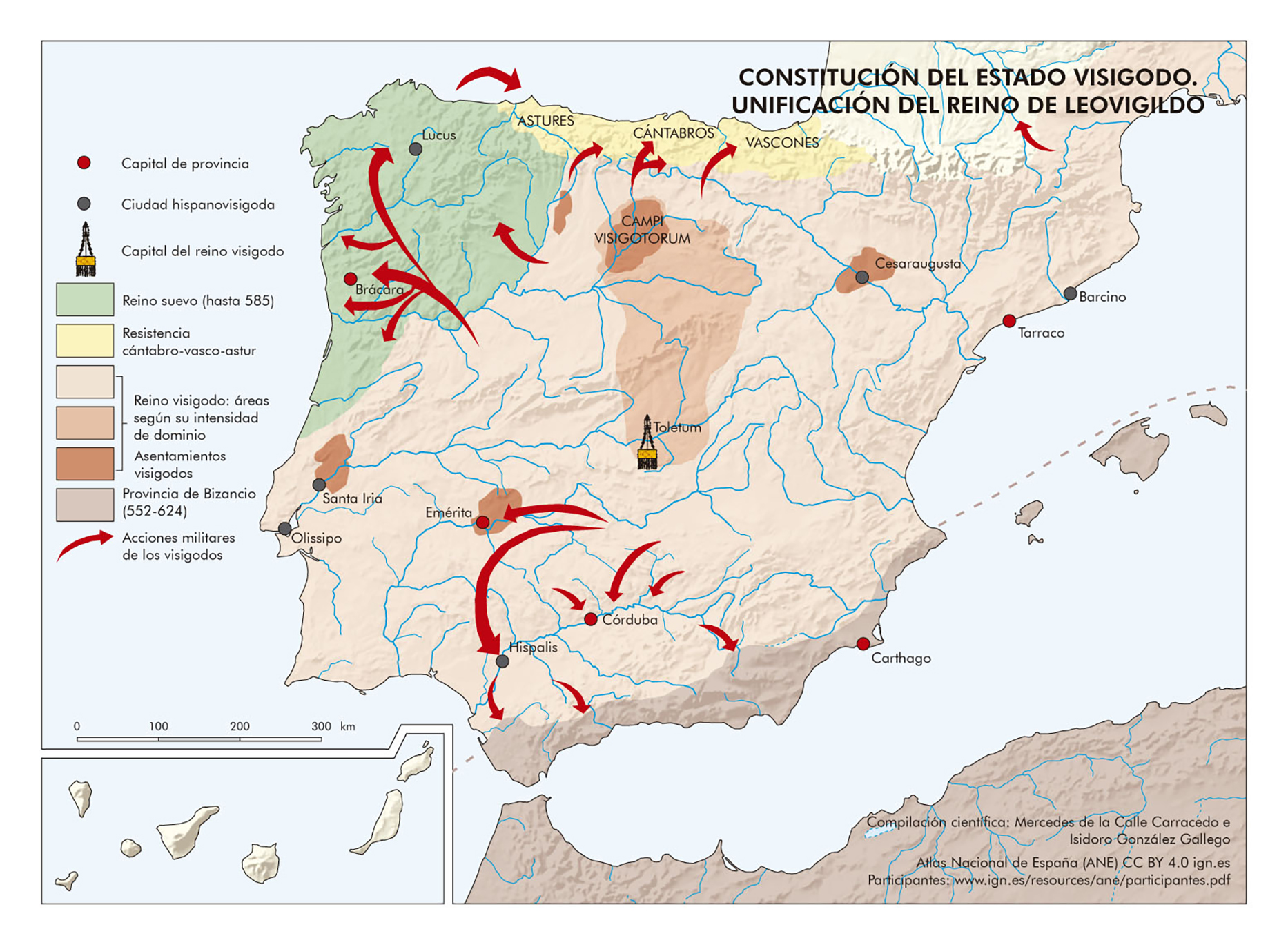
The arrival of the 5th century AD was marked by invasions by the Germanic peoples, with the Visigoths settling in Baetica until the beginning of the 8th century AD. In the 6th century AD, Rome lost control of Hispania (Figure 1). As a result, two distinct cultural societies emerged: the Hispano-Roman and the Visigothic (La-Chica, 1961; Velasco, 2017; Loring, 2007). Religiously, certain tensions existed between the two societies due to the Visigothic Arian creed (Loring, 2007; Martínez, 2019; Velasco, 2017; Blázquez, 2003). However, the 6th century AD was characterized by the abandonment of Arianism and the conversion to Catholicism under the reign of Reccared I in 589 AD (Loring, 2007; Manzano, 2011; Martínez, 2019).
In the 7th century AD, representatives of the Byzantine Empire were finally expelled by the Visigoths. However, internal strife weakened the kingdom, ultimately facilitating the arrival and conquest of the Muslims in the early 8th century AD (Loring, 2007; Martínez, 2019). The Church experienced a surge in power, leading to the increased importance of bishoprics (Loring, 2007; Velasco, 2017; Manzano, 2011).
Geographical context
The Cortijo Coracho archaeological site is located in the town of Lucena, Córdoba, Spain, within the Subbetic Mountain Range. Geologically, it is a rural landscape with clay soils where dryland farming has been practiced since ancient times. Olive cultivation for wine production and grapevine cultivation for oil, both for local consumption and export, were fundamental to the Romans. Such was its importance that it formed part of the agricultural system of villas strategically dispersed along the main Roman road that crosses the region: the Corduba–Antica-ria–Malaca road (Diéguez, 2015).
The hydrographic network is primarily centred on the Genil River, located south of the town, although there are tributaries flowing in a northeast-southwest direction, such as the Anzur and Perdices streams, as well as the Rigüejo and Lucena rivers.
Archaeological Context of Cortijo Coracho site
Cortijo Coracho was discovered during the construction of the Córdoba A-92/CN 331 highway, which connects the towns of Córdoba and Málaga. This discovery prompted an emergency archaeological intervention in 2003. Subsequent archaeological excavations revealed a large necropolis and the remains of a basilica.
That associated with the necropolis, was reconstructed after the archaeological intervention on the Viñuela industrial estate, through an agreement between the Lucena City Council and the Ministry of Public Works, facilitating its nearly complete relocation.
A total of 297 burials (Figure 2) has been excavated in the necropolis to date, although it is estimated that as many as 700 additional burials could be discovered after several archaeological surveys conducted by the local Heritage Department. As a result, this necropolis is believed to be one of the largest in the Iberian Peninsula dedicated to saints (ad santos) and constructed in the 4th century AD (Botella Ortega & Sánchez Velasco, 2008). On the other hand, the typology of burials, specifically the lack of grave goods, is more consistent with the 8th century AD.
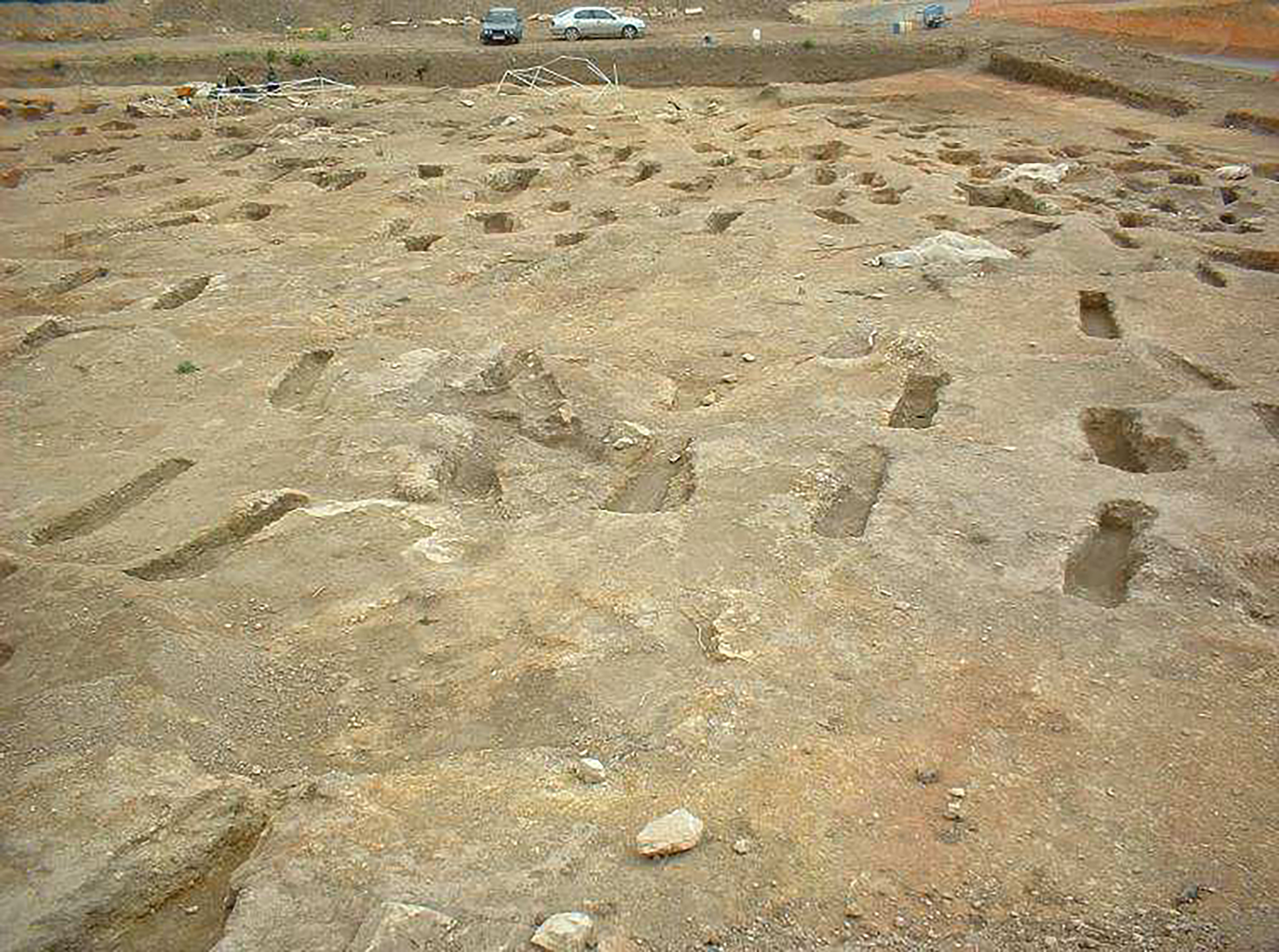
The recovered burials contained 424 individuals. One of the main characteristics is the significant number of reused or shared burials: 53 of them are double inhumations, while three skeletons found in 24 graves each. Additionally, ten burials contain four individuals each, four burials have five bodies each, and one burial contains six individuals each.
Collective burials have been found in various configurations, with the most common type involving the removal of a previously buried body and its placement at the feet of the newly interred individual. In other instances, particularly in nonadults burials, the bodies are separated by a slab of unworked rock (Figure 3).
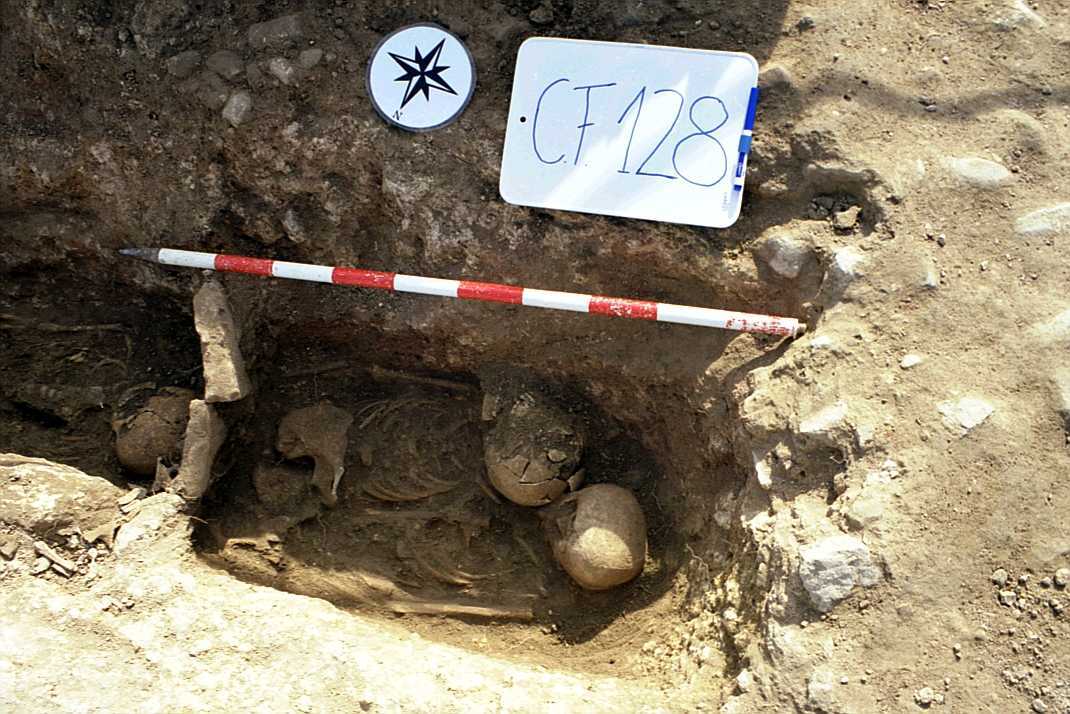
In terms of morphology, the burials are shallow and placed directly into the ground, with unhewn rocks of irregular shapes serving as tombstones. Smaller rocks are often placed to stabilize the larger horizontal rocks. These burials typically lack associated grave goods and exhibit variable orientations, although the majority are oriented from north to south. The arrival of the Germanic peoples in the necropolises of Lucena, Córdoba, implies a loss of street-like organization of the burials, a change to more modest funerary structures with a high percentage of reuse, and a change in the orientation of the tombs (Ortega-Ruiz, 2025).
Following its discovery and several surveys, the site of Cortijo Coracho was excavated under emergency, interventive means. The methodology employed in the archaeological excavation of this extensive necropolis, including the late Roman structural complex identified as a basilica, involved dividing and excavating sectors identified through the archaeological survey. Following excavation, documentation and photography of the discovered human remains were conducted (Diéguez, 2015).
The objective of this research is to determine the correlation between the burial systems at the Cortijo Coracho site, as well as the anthropological characteristics of the individuals buried there and the grave goods associated with them. Given this period marks the end of Roman influence and the continuation of Germanic migrations, it is hypothesised that during this transitional phase, the quantity and quality of grave goods and burial systems decreased. This situation parallels other cities in Baetica and the Iberian Peninsula.
Materials and Methods
All archaeological material recovered during the excavation, including the grave goods, after being documented and partially cleaned, was prepared for storage in boxes labelled with the sector and archaeological level to which they belonged. Subsequently, they were transferred to the Archaeological Museum of Lucena, including a brief documentation was created to describe some of the found elements and their respective locations (Diéguez, 2015).
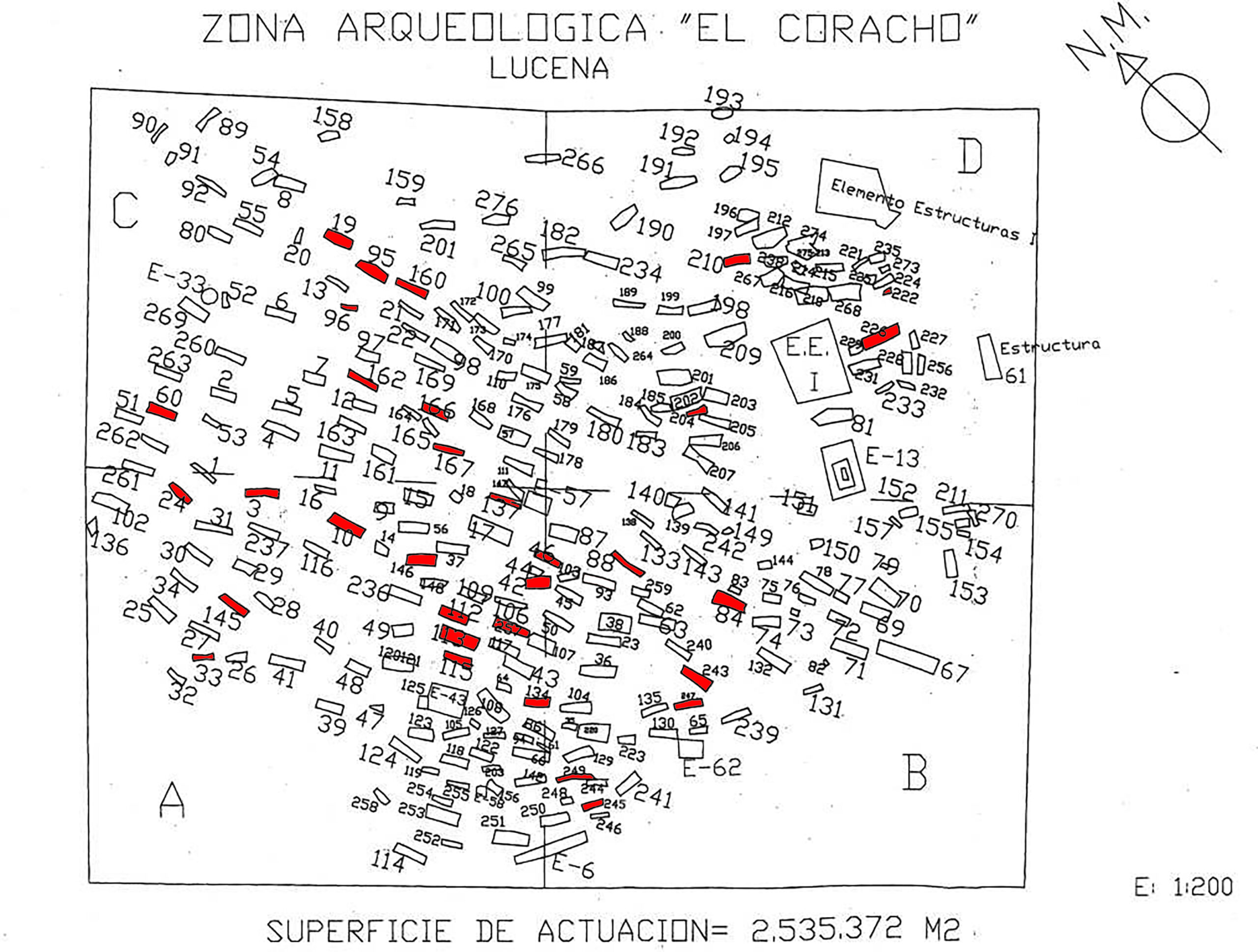
A total of total of 297 burials were recovered from the necropolis, including skeletal remains, funerary structures and graves goods (Figure 4). There is a seeming lack of order or organization in Cortijo Coracho compared to Cortijo Nuevo, the previous Roman site, where the street layout is lost, the tombs become collective and their construction is simpler with the arrival of German Tribes. After several archaeological surveys conducted by the Heritage Department of Lucena, it is estimated that there could be around 700 additional burials across the entire area occupied by the necropolis. Regarding the analysis of these graves, it has been observed that the majority are rectangular in shape and have covers made of large stone slabs. Depending on the number of individuals buried inside, some tombs exhibit extensions or divisions to their structure. The excavated burials have yielded a minimum number of 404 individuals to date. While the majority of these graves contain a single individual, several collective burials have been discovered, ranging from two individuals to some containing five or more occupants.
Anthropological analysis
Age-at-death for adult individuals has been estimated on the basis of the degree of wear of the dentition (Brothwell, 1981; Lovejoy, 1985), the ossification of patterns of certain cartilages with the method of the sternal insertion of the 4th rib (Krogman & Işcan, 1986) and modification of the pubic symphysis (Suchey & Brooks 1990). For nonadults after 12 years of age, degree of fusion of the epiphyses (McKern & Stewart 1957: 28) and dental development patterns (Ubelaker 1989: 249–287) were used; in children up to 12 years of age, length of certain long bones (Maresh 1970: 157-200) was also employed.
Estimation of osteological sex was based on the skull and pelvic morphology (Buikstra and Ubelaker, 1994), diameter of the humerus and femur heads (Stewart, 1979), and length of the radial head (Barrizbeitia, 1989). Sex estimation was not conducted on nonadults.
To estimate stature, we applied maximum long bone lengths to equations established by de Mendonça (1998) and Trotter and Gleser (1952).
Grave Goods
The grave goods are stored both in the warehouse of the Lucena Archaeological and Anthropological Museum and on display in its galleries. Since they were restored, preserved, and in a state of display, no further intervention was required, other than the documentation of the 43 grave goods found throughout the necropolis. All studies conducted to the grave goods were macroscopic, being classified by typology and material.
Statistical analysis
Fisher’s exact test was performed using SPSS version 27 to assess associations between pairs of variables. The presence of grave goods was examined in relation to sex (male, female, intermediate, and indeterminate) and age groups (non-adult, adult, mature, and indeterminate). Additionally, the material composition of the grave goods was analysed according to age group and sex. A p-value < 0.05 was considered statistically significant.
Ethical statement
This research presents an accurate account of the work performed; all data presented are accurate and methodologies detailed enough to permit others to replicate the work. This manuscript represents entirely original works, and work and/or words of others have been appropriately cited or quoted, and permission has been obtained where necessary.
This research adheres to the ethical principles established by the American Anthropological Association (AAA). Informed consent was obtained from all participants after explaining the study’s objectives. The researcher is committed to doing no harm and continuously evaluating the social impact of the findings on the community. The protocol was approved by the Ethics Committee, comprised of accredited members from all participating centres.
Results
Under the application of the aforementioned methodology to the materials associated with the funerary assemblages, a total of 43 grave goods were recovered, documented, and analysed. These were subsequently classified into four groups according to the osteological sex and the estimated age at death of the associated individuals:
- Adult burials, including females, males, indeterminate individuals, and neutral cases.
- Non-adult burials, including females and indeterminate individuals, as no males or neutral cases were identified within this subset.
- Mixed burials of adults and non-adults, comprising individuals exhibiting female and indeterminate characteristics.
- Indeterminate burials, for which the age-at-death of the individuals could not be estimated.
With regard to the first group, corresponding to adult burials with only male individuals, nine artefacts were recovered. These include a set of semicircular conical copper earrings, three single-handled globular ceramic jars, two necklaces, and a set of glass-paste beads. In addition, an iron knife blade (Figure 5A), heavily affected by corrosion, and a glass-paste intaglio from a ring were recovered. The latter is oval and flattened in shape, with a possible engraving on one of its surfaces, although its extensive wear prevents any precise identification. Finally, a metallic fastening mount was also documented.
Seven grave goods were found in burials containing only adult female individuals, including four sets of closed-hoop copper earrings, a single-handled globular ceramic jar, and two pins—one featuring a glass-paste head, with the remaining portion fragmented and made of copper, and another entirely made of bone (Figure 5B). The single mixed burial, containing a male and female adult, was associated with an indeterminate copper sheet.

Regarding adult individuals of indeterminate sex, when the sex cannot be assessed due to the lack of preservation of the skeleton, they were recovered with three grave goods from their burials: a set of closed-hoop copper earrings and two ceramic jars, one globular with a single handle and a pouring spout, and the other exhibiting a similar morphology but with a flat base, short neck, and an incomplete rim.
Regarding burials with only non-adult individuals, nine grave goods were recovered. These comprise three sets of closed-hoop copper earrings, a single-handled globular ceramic jar, a copper necklace, a glass-paste necklace (Figure 5C), and a metal brooch in the shape of a fish. Also were documented a copper pin with an inlay on its upper part, and a translucent glass paten with a flat base.
In the mixed burials containing both adult and non-adult individuals, four grave goods were recovered. One, associated with a female individual and a non-adult, consists of a set of closed-hoop copper earrings. Additionally, another set of earrings featuring coiled spiral decoration, a single-handled globular ceramic jar without decoration and a copper-and-brass ring were associated with indeterminate sex individuals. No grave goods were recovered among mixed burials in association with estimated male individuals.
Finally, among individuals of undefined age, in those cases when age-at-death was not observable, a bone die and a glass paten were recovered in association with a male individual, and a set of five copper pins was associated with a female individual. Regarding individuals of undetermined sex and age-at-death, the recovered grave goods include a set of open-hoop semicircular copper earrings, two single-handled globular ceramic jars without decoration (Figure 5D), a set of cylindrical light-blue glass-paste beads, a set of star-shaped cobalt-blue glass-paste beads, a dark elongated glass bead—likely the central piece of a necklace—and a bone figurine in the shape of a squirrel.
Fisher’s exact test showed no significant association between the typology of grave goods and either age group or sex (grave goods–age group: p = 0.066; grave goods–sex: p = 0.052), nor between the material of the grave goods and age group (material–age group: p = 0.065). In contrast, a significant association was observed between the material used for grave goods and sex (material–sex: p = 0.036). Copper was the most frequently identified material and was predominantly associated with adult and female individuals.
The analysis reveals differences that approach statistical significance, although they do not reach the established threshold. Adult individuals tend to be more frequently associated with copper earrings, but also with ceramic vessels. The remaining age groups show associations with other types of grave goods. A similar pattern is observed when considering the raw materials of the objects: clay is predominantly linked to pottery, while copper is mainly associated with earrings.
Overall, the distribution of grave goods across age groups is relatively balanced. However, earrings represent the most recurrent and diagnostically relevant item among female individuals.
In contrast, statistically significant differences are observed when examining the relationship between sex and the material composition of grave goods. Female individuals are significantly associated with copper objects, particularly earrings, pins, and collars. Conversely, male and indeterminate individuals show a stronger association with clay pottery and glass vessels (patens).
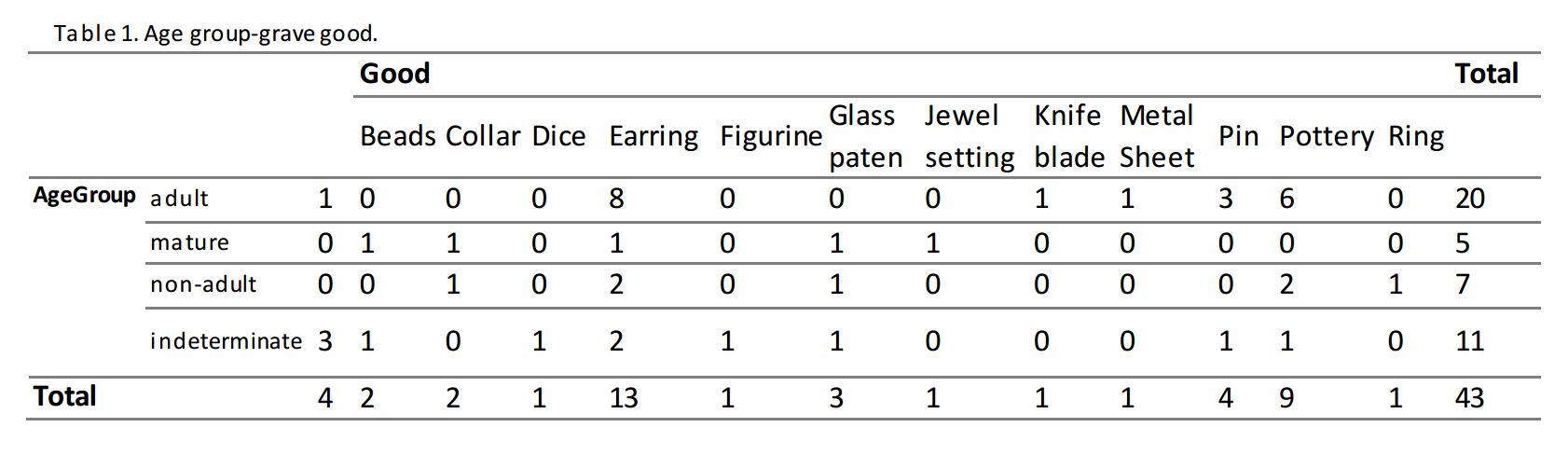
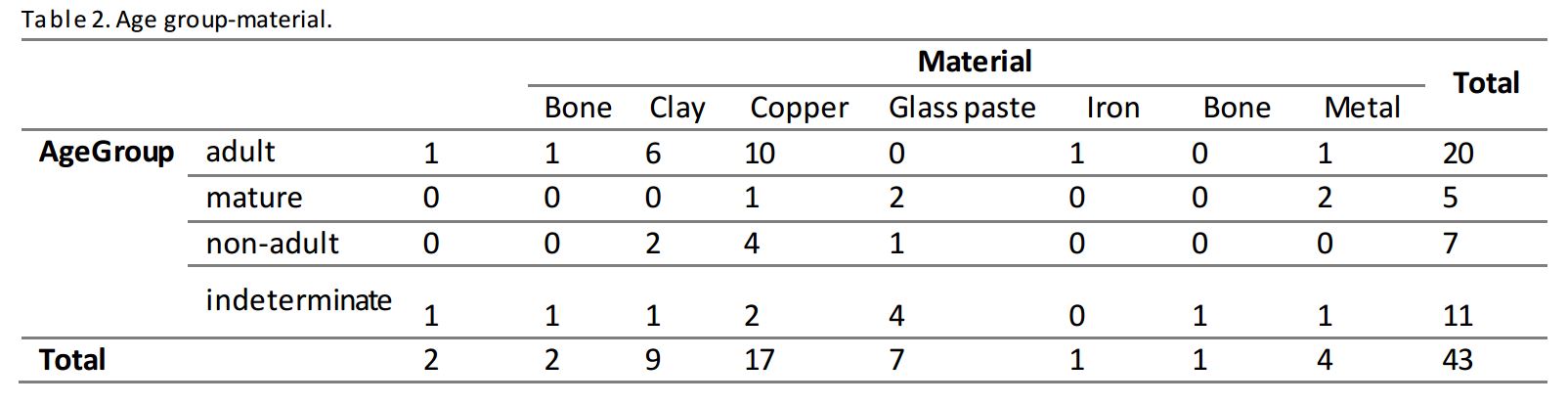
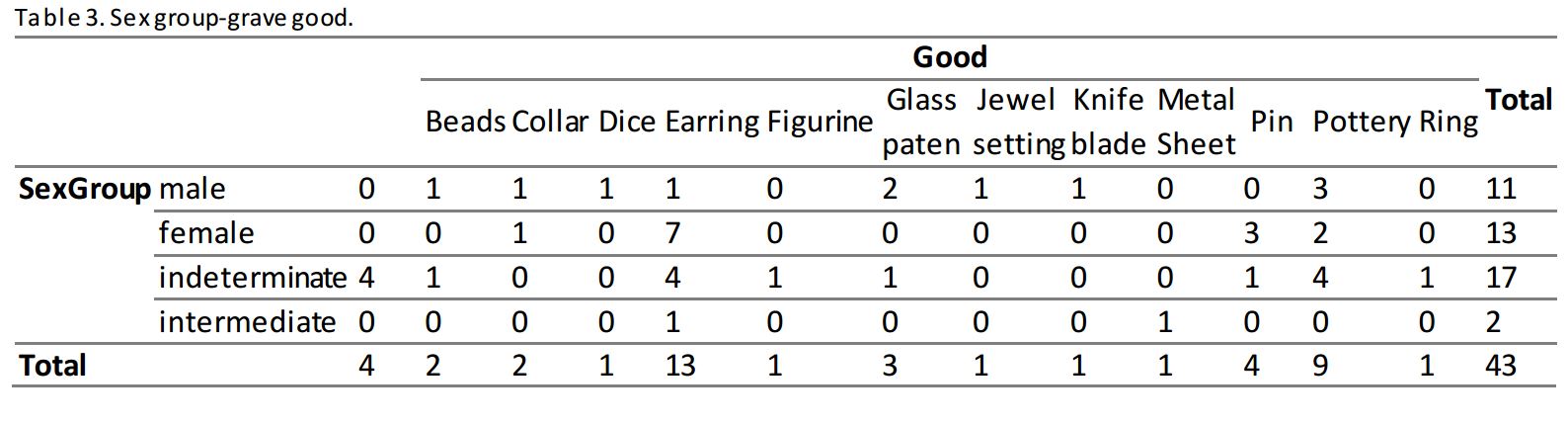
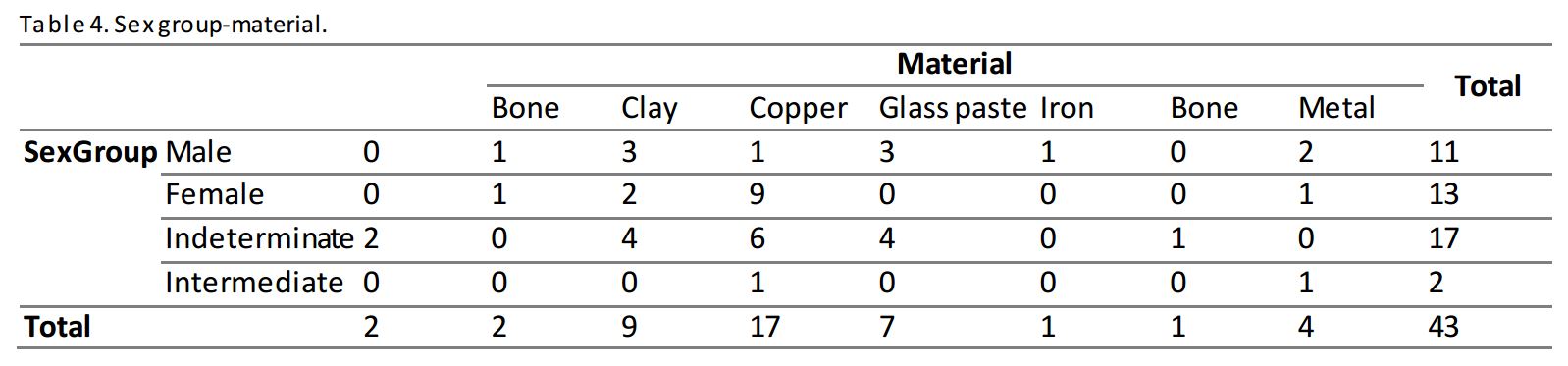
Throughout the chronological span attributed to the Cortijo Coracho site, ranging from the 4th to the 8th century AD, a total of only 43 funerary assemblages were recovered in association with the individuals interred within the necropolis, which comprises 297 burials in total. This represents 33 inhumations containing grave goods, accounting for 11.1% of the assemblage. Of these 33 burials, 22 correspond to individual interments, while the remaining 11 represent collective ones.
The most frequent artefacts are copper earrings, which appear related with twelve individuals—four of them associated with female individuals, three with non-adult individuals and one set associated with a male individual. The remaining four are linked to indeterminate individuals. The second most common category is pottery, located at a side of the head of every individual, represented in ten instances as part of the funerary assemblages, with no apparent correlation to the sex or age-at-death of the associated individuals. In general, in other sites at the Iberian Peninsula they range in colour from beige to orange, although in this necropolis, beige predominates.
Dress pins, represented on four occasions, are predominantly associated with female individuals (three pins made of metal or bone), while the remaining example is linked to a non-adult individual of indeterminate sex. Rings, ring-related elements, necklaces, and necklace beads are associated with adult males, as is the single iron knife blade. The rest of grave goods associated with non-adults are two collars, a crystal paten and a collar clasp. Finally, objects such as the bone die and the squirrel-shaped bone figurine, along with an indeterminate metal sheet, correspond to adult individuals of undetermined age.
Discussion
The arrival of the Germanic peoples in the Iberian Peninsula following the fall of the Western Roman Empire brought about a series of profound transformations that affected Hispano-Roman society in every sphere. Funerary practices were no exception, as the advent of Late Antiquity in Baetica (Eger, 2006; Punzón, 2009), particularly in the area of present-day Lucena (Ortega-Ruiz et al., 2023), marked a significant shift in mortuary traditions.
Burial rituals underwent substantial changes in terms of morphology and spatial arrangement. During the Roman Imperial period, the necropolis exhibits a street-like layout, with individual graves containing funerary assemblages. These burials were oriented west–east according to the position of the head and feet, and varied in complexity, featuring quadrangular pits dug into the ground and covered with gabled roofs, with at least one instance of a lead sarcophagus documented (Diéguez, 2015).
With the arrival of the Germanic populations, previously standardised burial orientation was abandoned, with the head now aligned toward the sunset. Graves ceased to follow street-like arrangements; over half of the interments represent reused burials, and the majority was excavated into the ground using unworked stone slabs (Punzón, 2009). However, there are some burials that try to imitate the Roman style but with bricks instead of tegulae, both for non-adults and adults.
In terms of funerary assemblages, both their frequency and craftsmanship experienced a marked decline, with only approximately 20% of burials containing associated grave goods (Eger, 2006). Nonetheless, significant variations are observed in rural necropolises, like Cortijo Coracho, where items such as earrings or necklaces occasionally occur (Carmona, 1998). Ceramic jars or bottles predominate, typically positioned adjacent to the head of the interred individual, while personal ornaments are rarely present. Notably, non-adult burials adhered to the same mortuary conventions as those of adults, suggesting that young individuals could occupy a comparable social role within Late Antique society at Cortijo Coracho (Ortega-Ruiz et al., 2025).
Aspects such as non-adults sharing tombs with adults was a practice observed at sites from other cultures and periods (Beaumont, 2021), such as the Greco-Roman El Fayoum (Muhlestein & Evans, 2021), the Roman and Hellenistic sites of Nea Paphos and ancient Corinth Regions (Marklein & Fox, 2021) or the ancient site of Zoodogos Pigi in Crete (Bourbou, 2021), among others. According to Muhlestein and Evans (2021) and Marklein and Fox (2021), this may be a reflection of children’s discrete identity, suggesting that they were integrated into the community, differing from other periods and cultures. This is also the case during in the Roman period in Lucena, with the site of Cortijo Nuevo (2nd–4th centuries AD), where the non-adults did not share burials and they have not only a non-reused one, but also their own place in the necropolis (Ortega-Ruiz et al., 2025).
As the necropolis is associated with a rural context, it stands in marked contrast to the elaborate funerary assemblages and typologies observed in the major cities of Baetica (Vaquerizo Gil, 2010). Nevertheless, the composition of these assemblages was influenced not solely by the economic means of the family or the deceased, but also by the symbolic message intended for the funerary ceremony and the objects’ perceived function in the afterlife (Vaquerizo Gil, 2023).
Over the course of the Roman Empire, from the 2nd to the 4th centuries AD, a progressive reduction in both the quantity and the quality and complexity of grave goods is evident (Ortalli, 2001). This trend is similarly observed in Lucena during the transition from the Roman Imperial period to Late Antiquity (Ortega-Ruiz, 2025).
With regard to the funerary assemblages themselves, ceramic vessels are commonly encountered in Late Antique Baetica, as observed at the Orden-Seminario site in Huelva, alongside metallic elements (Batanero, 2016). These ceramic vessels generally range in colour from beige to orange, although in the Cortijo Coracho necropolis, beige predominates. According to Carmona’s interpretation (1998), their placement at the head of the grave may be associated with the adoption of Christianity and the ritual of baptism. Likewise, the basilica to which the necropolis is associated presents a period showing Roman rituals, then passing to Christian morphology and rituals, also having a later Byzantine stage (Botella Ortega & Sánchez Velasco, 2008).
The results offer a very limited view regarding grave goods; however, the morphology of the tombs suggests an important change: the street layout, orientation, and general morphology characteristic of the Roman period are lost. In fact, there is an initial period in which Germanic tombs attempt to imitate Roman morphologies, but with techniques similar to those that would later become predominant: excavated in the ground covered with slabs of rock (Ortega-Ruiz, 2025, Dieguez 2015).
Although there are no significant differences, if we link estimated sex with grave goods, we observe that most earrings are associated with adult females, as are pins, although they are also found occasionally in non-adults. Pottery is common to both sexes and among adults and non-adults, while grave goods associated with necklaces predominate in non-adults and adult males.
Earrings, the most frequently represented grave goods, exhibit a morphology that is characteristic of the province of Baetica, typically with a circular cross-section but with varying fastenings, as observed in the Sierra Elvira, Marugán, and Cortijo de Chopo necropolises in Granada, and in Villanueva del Rosario in Málaga, as well as in the Carpio de Tajo necropolis in Toledo (Salinero, 2017). Despite Mediterranean influences during this period, the population residing in this former Roman province retained strong Hispano-Roman traditions, which remained largely unchanged over time.
If we compare our results with another Late Antique rural necropolis in Baetica, such as Orden-Seminario, Huelva (Batanero et al., 2016), we observe that there are not many differences in either the morphology and arrangement of the structures or the grave goods associated with the individuals. Although they exhibit an orderly arrangement, unlike those found at Cortijo Coracho, the morphology is very similar: excavated in the ground with an elongated shape, rounded edges, and covered with rock slabs. Furthermore, most of these are reused inhumations. Regarding the grave goods, we observe that beige, single-handled jugs are a common element among the few recovered grave goods, located on the right side of the skull in most cases, while metal objects such as tool blades and rings are also present. Infant burials were also reused, and the only grave goods found in these burials were a ceramic jug (Batanero et al., 2016).
Drawing analogies with urban necropolises, such as the necropolis of the Roman and Late Antique city of Munigua, Villanueva del Río y Minas, Seville (Eger, 2006), we observe a certain similarity. While there are hardly any changes in the orientation of the graves since Roman times, with the arrival of the Visigoths, an increase in the reuse of burials is observed, and these graves are covered with large slabs of rock. Grave goods remain scarce (1 in 5 burials), and the majority are ceramic jugs placed near the head, with one exception: a set of metal earrings. This follows the pattern proposed by Flörchinger (1998), who found that in Visigothic times in the south of the Iberian Peninsula, grave goods were sporadic and consisted mostly of ceramic jugs and the occasional isolated ornament.
On the other hand, if we compare Cortijo Coracho with urban necropolises of the current provincial capital, Corduba, the changes are much more significant (Sánchez Ramos, 2005). Although both agree that during the Late Antique period basilicas associated with a martyr, with their respective necropolises, began to appear, as is the case at Cortijo Coracho, burials began to be built from reused structures from earlier periods and in abandoned domestic structures within the city.
Some burials in the capital follow the same pattern of tombs covered with stone slabs, lacking any symbolic symbols. They maintain a west-east and northeast-southwest orientation and show a common reuse of funerary building materials. However, most are cist burials in the eastern part of the city and in the northern sector, where burials are often in a capuchin style. Unlike rural necropolises, multiple burials are very rare, but they do contain a small quantity of grave goods (around 7%), most of which are glass vessels and small ceramic jugs placed on either side of the skull, linked, according to some sources, to the Christian ritual of purification.
Conclusion
The Cortijo Coracho necropolis aligns closely with other necropolises of the former Roman province of Baetica during the final stages of the Empire in Hispania, as well as the subsequent arrival of the Germanic peoples in the Iberian Peninsula. Over this period, both the number and the quality of funerary assemblages progressively declined. The most common grave goods consist of beige, globular ceramic jars, typically placed near the heads of the buried individuals, which appear to be associated with Christianity and the ritual of baptism.
Metallic elements, primarily comprise personal decorative items such as circular earrings and pins, while other objects, including knife blades or possible metal sheets associated with labour tools, are also present. In both instances, these patterns correspond closely with coeval sites in Baetica, particularly those situated within rural contexts.
In terms of differentiation related to age-at-death of funerary assemblages, as previously observed in the morphology and typology of adult and non-adult graves, the assemblages do not exhibit distinctions based on the age-at-death of the interred individuals. This pattern, linked with the type burials, where they share them with other adults, indicates a comparatively more egalitarian treatment of non-adult and adult members of society, contrasting with the practices observed during the Roman Imperial period.
When correlating funerary assemblages with biological sex, it is observed that items related with hair arrangement, clothing, and jewellery are predominantly linked to female individuals, whereas rings and necklaces are documented with adult males, as are metallic objects, including both the knife blade and the presumed tool-related sheet. This distribution may reflect a parallel with the social roles that individuals likely held during their lifetime in ancient Lucena.
Ultimately, Cortijo Coracho stands as a representative example of the socio-cultural transition in rural Baetica, reflecting the gradual transformation of funerary traditions from the late Roman world into the early medieval period.
Acknowledgements
The research conducted at the Cortijo Nuevo (2nd–4th centuries AD) and Cortijo Coracho (4th–8th centuries AD) necropolises was made possible through the support of the Department of Historical Heritage of Lucena, Córdoba. These sites provided a valuable framework for examining the transformation of funerary practices from the Roman Imperial period through Late Antiquity. We also wish to acknowledge the contributions of the professionals and students of the Instituto de Formación Profesional en Ciencias Forenses and the Isabel I University for their dedicated contributions to the analysis of both the buried individuals and their associated funerary assemblages over the course of this research.
References
Ardanaz Arranz, F. (2000) La necrópolis visigoda de Cacera de las Ranas (Aranjuez, Madrid). Arqueologia, Paleontología y Etnografía. (7).
Bailey, S., Vashishth, D. (2018) Mechanical Characterization of Bone: State of the Art in Experimental Approaches-What Types of Experiments Do People Do and How Does One Interpret the Results?. Current osteoporosis reports. 16(4), 423–433. https://doi.org/10.1007/s11914-018-0454-8
Batanero Martín, C., Beltrán Pinzón, J. M., Vera Rodríguez, J. C. (2016). La Necrópolis Tardoantigua de la orden–seminario (Huelva): rituales funerarios y aspectos antropológicos. Onoba. Revista de Arqueología y Antigüedad. (4). https://doi.org/10.33776/onoba.v0i4.2823
Blázquez, J.M. (1985) Historia de España Antigua. Tomo II: Hispania Romana. Madrid. 499–511.
Beaumont, L., Dillon, M., Harrington, N. (ed.). (2021) Children in Antiquity. London and New York, NY: Routledge/Taylor & Francis Group. http://dx.doi.org/10.4324/9781315542812-45
Berrizbeitia, E. L. (1989). Sex determination with the head of the radius. Journal of forensic sciences. 34(5), 1206–1213.
Botella Ortega, D., Sánchez Velasco J. (2008) La Basílica de Coracho. Al-Yussana, Monografías de Patrimonio Arqueológico y Etnológico Vol.1. Ayuntamiento de Lucena. Delegación de Patrimonio Histórico. Lucena, 1ª edición.
Bourbou C. (2021) The greatest of treasures: Advances in the bioarchaeology of Byzantine children. Children in Antiquity: Perspectives and experiences of childhood in the ancient Mediterranean. London and New York, NY: Routledge/Taylor & Francis Group. 594–608. http://dx.doi.org/10.4324/9781315542812-45
Brothwell D. (1981) Digging Up Bones. New York, Ithaca: Cornell University Press.
Carmona Berenguer, S. (1998) Mundo funerario rural en la Andalucía tardoantigua y de época visigoda. La necrópolis tardorromana de El Ruedo (Almedinila, Córdoba). Córdoba.
Christensen, A.G., Passalacqua, N.V. (2018) Analysis of Skeletal Trauma. A Laboratory Manual for Forensic Anthropology. Academic Press, 185–205.
Diéguez Ramírez J. P. (2015) Estudio Bioantropológico comparado de tres necrópolis históricas excavadas en el Término Municipal de Lucena (Córdoba). Tesis Doctoral. Universidad de Granada, Departamento de Medicina Legal, Toxicología y Antropología Física, Facultad de Medicina. Granada, España.
Eger, C. (2006) Tumbas de la antigüedad tardía en “Munigua” tipos de tumba, ritos de enterramiento y ajuares funerarios en una pequeña ciudad del sur de España en los siglos III/IV a VII. Anales de arqueología cordobesa. 17(2), 137–160.
Flörchingher, A. (1998) Romanische Gräber in Südspanien. Beigaben- und Bestattungssitte in westgotenzeitlichen Kirchennekropolen. Rahden/ Westf.
Joyce, R.A., Pollard, J. (2010) Archaeological Assemblages and Practices of Deposition. The Oxford Handbook of Material Culture Studies. Oxford University Press. https://doi.org/10.1093/oxfordhb/9780199218714.013.0012
Krogman W. M., Içcan M. Y. (1986) The Human Skeleton in Forensic Medicine. Springfield, Illinois. 990–999.
La-Chica Cassinello, G.D. (1961) La estructura económica de Hispania en el Bajo Imperio. Zephyrvs Revista de Arqueología Universidad de Salamanca. 12, 55–170.
López Gómez, J. C., Alvar, J. (2021) Hacia un cambio de paradigma: manifestaciones religiosas en la Hispania del siglo III. Hispania sacra. 73(104), 19–30.
López Requena, M. Barroso Cabrera, R. (1994) La necrópolis de la Dehesa de la Casa. Una aproximación al estudio de la época visigoda en la provincia de Cuenca. Cuenca.
Loring, Mª I., Pérez, D., Fuentes, P. (2007) La Hispania tardorromana y visigoda. Siglos V-VIII. Madrid. 12–282.
Lovejoy C. O., Meindl R., Mensforth R. P., Barton T. (1985) Multifactorial determination of skeletal age at death: A method and blind tests of its accuracy. American Journal of Physical Anthropology. 68, 1–14.
Manzano Moreno E. (2011) Épocas medievales. Historia de España, Barcelona. 2, 41–85.
Marklein K. E., Fox, S. C. (2021) The bioarchaeology of children in Greco-Roman antiquity. Children in Antiquity: Perspectives and experiences of childhood in the ancient Mediterranean. London and New York, NY: Routledge/Taylor & Francis Group. 567–580. http://dx.doi.org/10.4324/9781315542812-45
Maresh, M. M. (1970) Measurements from roentgenograms. Human Growth and Development, R.W. McCammon, Ed., Springfield IL: C.C. Thomas.
Martínez Jiménez J. M. (2019) El fin de la romanidad (ss. IV-VIII). Arqueología romana en la península ibérica. Editorial Universidad de Granada, 79–94.
De Mendonça, M. C. (1998) Determinación de la talla a través de la longitud de los huesos largos. Tesis Doctoral. Universidad Complutense de Madrid. 14–34, 68.
Muhlestein, K., Evans, R.P. (2021) Death of a Child: Demographic and preparation trends of juvenile burials in the Graeco-Roman Fayoum. Children in Antiquity: Perspectives and experiences of childhood in the ancient Mediterranean. London and New York, NY: Routledge/Taylor & Francis Group. 534–544. http://dx.doi.org/10.4324/9781315542812-45
Ortalli, J. (2001) Il culto funerario della Cispadana romana. Rappresentazione e interiorità. Heinzelmann, M. et al. (ed.). Culto dei morti e costumi funerari romani. Wiesbaden. 215–242.
Ortega Ruiz, R., Gigante Villa, M., Pascua Ríos, C. (2018) Mortalidad Infantil y Juvenil durante la Antigüedad Tardía: el caso de Cortijo Coracho, Lucena, Córdoba. III Jornadas de Jóvenes Investigadores en Arqueología. Asociación de Jóvenes Investigadores en Arqueología Excavemos. Universidad Complutense de Madrid.
Ortega Ruíz, R., Gutiérrez Durán, C., Engra Izquierdo, C. (2023) The change of funerary rituals during the Late Antiquity through the Cortijo Nuevo and Cortijo Coracho sites, Lucena, Córdoba. Death and the Societies of Late Antiquity : New methods, new questions? Gaëlle, G., Boyer, C., & Anstett, É. (ed.). Aix-en-Provence : Presses Universitaires de Provence. https://doi:10.4000/books.pup.67836
Ortega-Ruiz, R., Gutiérrez Durán, C., Botella Ortega, D. (2025) Changing funerary rituals for juveniles at Cortijo Nuevo and Cortijo Coracho, Lucena, Cordoba, Spain, during Late Antiquity. Journal of Archaeological Science: Reports, 62, 104995. https://doi.org/10.1016/j.jasrep.2025.104995 .
Ortner, D. J. (2003). Identification of Pathological Conditions in Human Skeletal Remains. Elsevier.
Ortner, D.J., Puschart W.G.J. (1981) Identification of pathological conditions in human skeletal remains. Washington DC, US, Smithsonian Institution Press.
Punzón, J.M.R. (2009) Espacios funerarios en la Bética durante l’a antigüedad tardía: mundo urbano vs. mundo rural. Gausac: Publicació del Grup d’Estudis Locals de Sant Cugat del Vallès, 34-35, 121–130.
Reinhart, W. (1947) Los anillos hispano-visigodos. Instituto Diego Velázquez.
Ribera i Lacomba, A., Soriano Sánchez, R. (1987) Enterramientos de la antigüedad tardía en Valentia. Lucentum. 6, 139–164.
Salinero Sánchez, I. (2017) Ajuares personales en el contexto funerario: algunos ejemplos de la necrópolis tardoantigua de Plataforma de Peñarrubia, (Campillos, Málaga). Scientia Antiquitatis. 1(2) 243–256.
Sánchez Ramos, I. (2005) Las necrópolis de Corduba durante la Antigüedad Tardía. Anales de Prehistoria y Arqueología, 21, 165–178.
Schaefer, M., Black, S., Scheuer, L. (2009) Juvenile Osteology. Academic Press. https://doi.org/10.1016/B978-0-12-374635-1.X0001-X
Suchey J. M., Brooks S. (1990) Skeletal age determination based on the os pubis: A comparison of the Acsádi- Nemeskéri and Suchey-Brooks methods. Human Evolution, 5 (3), 227–238.
Trotter, M., Gleser, G. C. (1952) Estimation of stature from long bones of American Whites and Negroes. American Journal of Physical Anthropology. 10 (4), 463–514.
Ubelaker, D.H. (1989) Human Skeletal Remains: Preservation or reburial? American Journal of Physical Anthropology, 32 (S10), 249–287.
Vaquerizo Gil, D. (2010) Necrópolis Urbanas de la Bética. Ed. Universidad de Sevilla.
Vaquerizo Gil, D. (2023) Necrópolis, ritos y mundo funerario en la Hispania romana. Reflexiones, tendencias, propuestas. Vínculos de Historia, 12, 40–64. http://dx.doi.org/10.18239/vdh_2023.12.02
Velasco, J. S. (2017) La Antigüedad tardía y la época visigoda. La ciudad y sus legados históricos: Córdoba romana. Real Academia de Ciencias, Bellas Letras y Nobles Artes de Córdoba, 313–369.

Received: October 13th, 2025;
Accepted: February 05th, 2026 ;
Online first: April 9th, 2026;
Published: TBA
Copyright: © 2025 Ortega-Ruiz et al. This is an open access article distributed under the terms of the Creative Commons Attribution License, which permits unrestricted use, distribution, and reproduction in any medium, provided the original author and source are credited.
