Biological, socioCultural and PSychological determinants of nutritional status until adulthood
(BiCePS Nutrition)



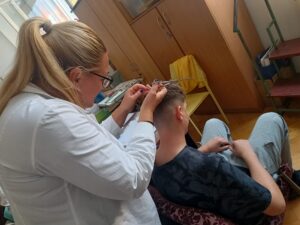
The research is being conducted in order to determine the prevalence of overweight and obesity in Croatian adolescents, and it is expected that the results will contribute to finding the best ways to prevent adverse health outcomes associated with obesity/undernutrition. As part of the research, the variability of body size and composition will be determined on a sample of 800 Zagreb adolescents of both sexes (aged 14-19 years), whose morphological characteristics and hand grip strength will be measured, and basic sociocultural, economic and psychological characteristics that could be related to nutritional status. Buccal mucosa swab samples will be collected from a sub-sample of subjects, from which DNA will be isolated and variants in genes for taste receptors (sweet and salty) will be determined, and the association of these variants with nutritional status will be examined. The anthropometric characteristics of today’s adolescents will be compared with the results of previous research conducted on adolescents of the same age, as well as in relation to other populations from the region and those around the world, which will significantly contribute to determining secular changes and understanding the connection between the biological variability of these complex characteristics and the cultural, economic and social factors. The research will also contribute to the understanding of the impact that genetically defined preferences in the selection of certain types of food have on the eating habits and nutritional status of adolescents in the City of Zagreb.
ACTIVITIES
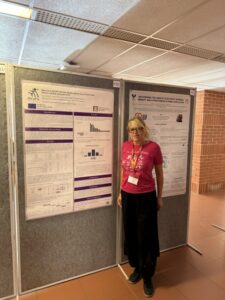
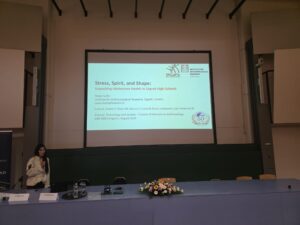
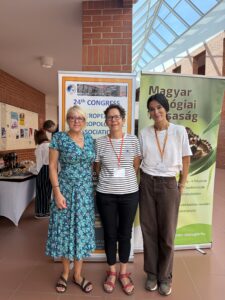
The 24th Congress of the European Anthropological Association was held in Budapest from 25 to 28 August 2026. The theme of the congress was “Science, Technology and Society – Fusions of Horizons in Anthropology”, and it was organized by the Faculty of Science, Eötvös Loránd University. Our colleagues Vanda Pribačić and Nives Fuchs participated in the congress by presenting part of the results of the BiCePs_Nutrition research in the form of a poster presentation and an oral presentation.
The Book of abstracts is available at the link https://eaa2026.com/wp-content/uploads/2026/08/abstracts_AK_0819.pdf
In the photos from left to right: Vanda Pribačić, Nives Fuchs, Vanda and Nives with the organizer of the congress, Assoc. Prof. Dr. Sc. Annamária Zsákai.
We are pleased to publicly announce the report on health habits and some developmentally relevant characteristics of secondary school students in the City of Zagreb. The report presents selected results of a study conducted in the 2025/2026 school year in four secondary schools in Zagreb – two grammar schools and two vocational schools.
We would like to thank all students who participated in the study, as well as their parents/guardians and the schools and staff who enabled and supported its implementation.
It is important to emphasize that this report presents preliminary results. Since the analyses are still ongoing, the report will be supplemented and updated later.
No part of this report, including textual data, tables, graphs and measurement results, may be reproduced, distributed, quoted or used in other public or commercial works without the prior written consent of the author.
The report is written in Croatian and is available at the link Izvjestaj_BiCePs 2026
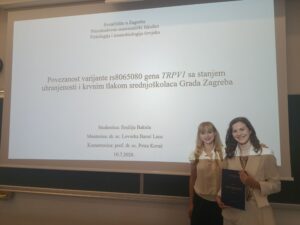
On Friday, July 10th 2026, Emilija Bakula, a student of the Graduate Study Program Experimental Biology, Physiology and Immunobiology module at the Department of Biology, Faculty of Science, University of Zagreb, successfully defended her thesis, prepared as part of the BiCePs_Nutrition project. The thesis entitled “Association of the rs8065080 variant of the TRPV1 Gene with nutritional status and blood pressure among high school students in The City of Zagreb” was prepared under the mentorship of Lovorka Barać Lauc, PhD, and co-mentorship of Professor Petra Korać from the Department of Molecular Biology, Department of Biology, Faculty of Science.
We congratulate Emilija and wish her much success in her future work!
Popularization of science at the Većeslav Holjevac Elementary School
As part of the Većeslav Holjevac Elementary School Science Fair, held on April 23, 2026, on the topic of Informatics in Science, the aim of which was to introduce students to the role of computer technologies in modern scientific research, the Biceps_Nutrition project also participated. We measured around 40 interested visitors of the Fair for free on the Visbody30-S device.
On Monday, March 23, 2026, we began field research at the 1st Technical School Tesla.
We would like to express our heartfelt gratitude to the principal, Mr. Vladimir Krstić, PhD, for his support and warm welcome, and to the head of the Physical Education and Health Education Expert Council, Professor Vjekoslav Ditrih, for the excellent organization and motivation of students to participate in the research!


Marijana Peričić Salihović, PhD, and Lovorka Barać Lauc, PhD, spent the period 16-20 March 2026 at the University of Nottingham, holding networking meetings. Their host was Mrs Qian Yang, Associate Professor in the Department of Food, Nutrition and Dietetics. Professor Yang is the co-leader of the Sensory and Consumer Sciences research group with over 15 years of experience in research and teaching, with significant collaboration with industrial partners. Her research focuses on understanding sensory perception and consumer behaviour and their role in developing sustainable food systems and improving human health.
During the visit, valuable contacts were made and the foundations were laid for future scientific collaboration with the University of Nottingham.

In 2006, the L’Oréal–UNESCO National Program “For Women in Science” was launched, which rewards excellence. As part of this program, four young female scientists in the final stages of their doctorates in the fields of natural sciences, medicine and health, biotechnical sciences, including interdisciplinary areas of natural sciences, are awarded each year in Croatia.
This year’s 20th anniversary is accompanied by a special exhibition symbolically titled “You Were My Inspiration”, dedicated to the relationship between the 25 female scientists who received this valuable recognition and their 25 mentors or role models. The exhibition is open from 9 to 22 February 2026 in Zagreb. Until 15 February, it will be on display at Cvjetni trg, in the area near the French Institute and Masarykova Street, to the intersection with Gundulićeva Street, and then moves to Zrinjevac, where it will run from 16 to 22 February.
One of the winners of the National Program “For Women in Science” in 2024 is our Maja Šetinc, PhD, mag. mol. biol. (now Maja Carić). You can see Maja and her mentor, Tatjana Škarić-Jurić, MD, PhD, on the billboard at Cvjetni trg!
The BiCePs_Nutrition team congratulates Maja and Tatjana on this recognition; we are extremely pleased and proud that your perseverance, effort and results have been deservedly recognized at this, international level!

On February 6, 2026, we began field research at the Third School of Economics. We would like to express our heartfelt gratitude to the Principal, Mr. Bernard Iličić, MA in Theology, and Ms. Antonela Sraga, MA in Pedagogy and Anthropology, and Ms. Martina Mišić, MA in Croatian Language and Literature and MA in Pedagogy, for their support, organization, and excellent preparation of the students for participating in the research.


In December 2025, we began field research at the 3rd Gymnasium in Zagreb, which continued in January 2026. We would like to thank the Principal, Mrs. Darka Sudarević, professor of computer science, the Teachers’ Council and professional services of the 3rd Gymnasium for their support of this research. We would also like to thank all the students that responded to our call, as well as their parents for consenting that their children participate in our research.


Our Tatjana Škarić-Jurić, MD, PhD, is one of the winners of the Croatian Academy of Sciences and Arts (HAZU) Foundation Competition for 2025. The HAZU Foundation has chosen to grant a scholarship to dr. Škarić-Jurić’s project proposal entitled “Sense of taste as a predictor of adolescent nutrition”. Congratulations!
https://zaklada-hazu.hr/odluka-o-dodjeli-sredstava-zaklade-za-2025-godinu/
Our doctoral student Veronika Bencerić received a scholarship from the Croatian Science Foundation through the “Mobility Program – Outgoing Mobility of Assistants”, for a stay at the Sensory Science Centre of the University of Nottingham, United Kingdom. She will be training in the field of research into the mechanisms of sweet taste perception under the mentorship of Associate Professor Qian Yang throughout the duration of her stay, from 12 December 2025 until the end of March 2026.

 Our PhD student Veronika Bencerić gave an oral lecture entitled “Sense of taste, smoking and nutrition of adolescents in Zagreb – a pilot study”. Maja Carić and associates presented a poster entitled “Pilot study of the relationship between physical activity levels, hand grip strength and nutrition in adolescents”, while Nives Fuchs and colleagues presented a poster entitled “Preliminary results of research on stress as a determinant of the level of nutrition of adolescents in the city of Zagreb”. Abstracts of the presentations can be found in the Book of Abstracts.


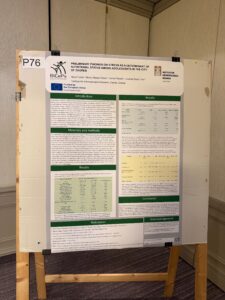
In October 2025, we conducted field research at the Vth Gymnasium in Zagreb. We would like to thank the Principal, Mr. Tihomir Engelsfeld, PhD, the Teachers’ Council and professional services of the Vth Gymnasium for their support. We would also like to thank the students (all 304 of them!) and their parents for their willingness to participate in our research.
Many thanks also to our dear colleagues Lucija Dodigović and Iva Šunić, who, although not formally collaborators on the project, helped us and stepped in when needed!


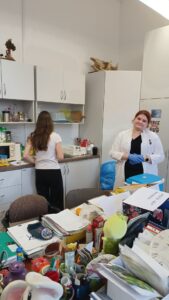
Assistant Veronika Bencerić completed the online course “Getting to know the syntax of the R language and its application in basic statistical and graphical data analysis (organized by the University Computing Center of University of Zagreb), as well as the live course “Workshop on Phylogeny & Evolution” at the University of Mainz, Germany (June 2-6, 2025). Senior assistant Maja Šetinc, PhD, completed the workshop “Biostatistics in R”, organized by Chemical Codes d.o.o. (May 21-28, 2025).
In the COST action CA23120 – Religious Identity, Bullying and Wellbeing at School: A Transnational Collaboration (ORBIT), our associate, Nives Fuchs, PhD, is a Management Committee member for Croatia. She joined the Action because of the possibility to share among colleagues some research methods from the BiCePs_Nutrition project, which are related to examining the connection between religious identity, psychological well-being, life satisfaction and spirituality in adolescents. Dr. Nives Fuchs shared the psychological scales used in BiCePs_Nutrition with the members of her working group from other European countries for the purpose of conducting an international comparative study, thus significantly contributing to our networking efforts and opening the doors to the possibility of future collaborations. She also joined the working group that investigates psychological perspectives of religious education in secondary schools within the legislative frameworks across European countries. The aforementioned comparative study is significant as it shows changes in individual European countries towards abandoning religious education focused on one religion and strengthening intercultural dialogue and spirituality.

The library of the Institute for Anthropological Research is full of donated gifts for high school students who will participate in the upcoming field study on adolescent nutrition: the BiCePs_Nutrition project. A big thank you to dm-drogerie markt Croatia for a truly generous donation!


Based on the application for the funding call “Young Researchers Career Development Project – Training New Doctoral Students (NPOO-DOK-2023-10)”, the Croatian Science Foundation has approved the employment and mentoring of an assistant who will participate in the work of the BiCePs_Nutrition project for the next five years, and as a part of which will write a doctoral dissertation. After a public call for a job opening, the committee selected Veronika Bencerić, mag. exp. biol. as the best candidate. Veronika, welcome to our project team!
For field research measurements planned by the BiCePs_Nutrition project, we acquired a state-of-the-art instrument that combines non-invasive 3D scanning and bioimpedance methods, and provides data on body posture (posture), the circumference of various areas of the trunk and extremities, and body composition (muscle mass, body fat and water content). The body scanner generates measurement results in the form of a detailed .pdf report containing quantitative measured and reference values, as well as a 3D model of the body. This report is available immediately and can be shared with the test subject, which will be a particular benefit for the future participants of our research.
Nives Fuchs, PhD, attended the course “Psychological assessment and prevention of mental disorders in the school context” in April and May, organized by the Department of Psychology, Faculty of Humanities and Social Sciences, University of Zagreb. This training will be useful for her in approaching students in field research, collecting and analyzing data.
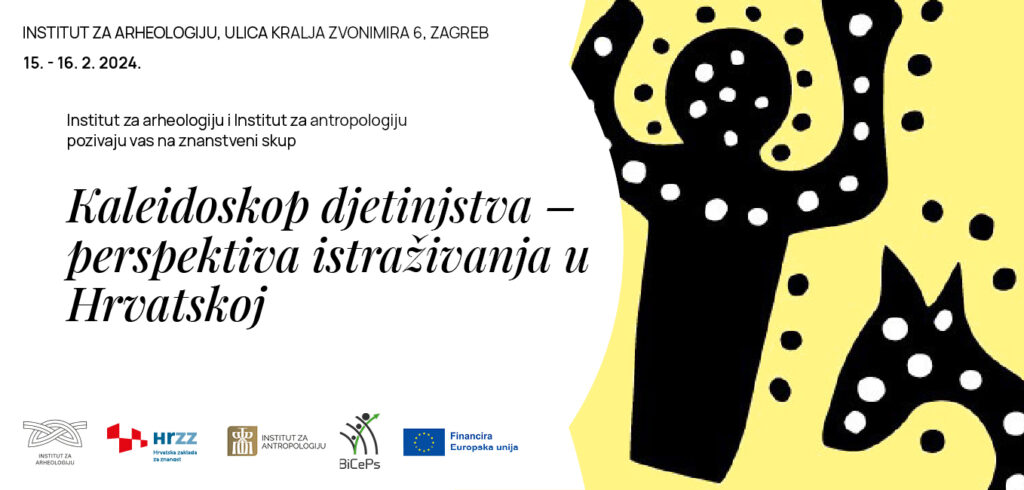
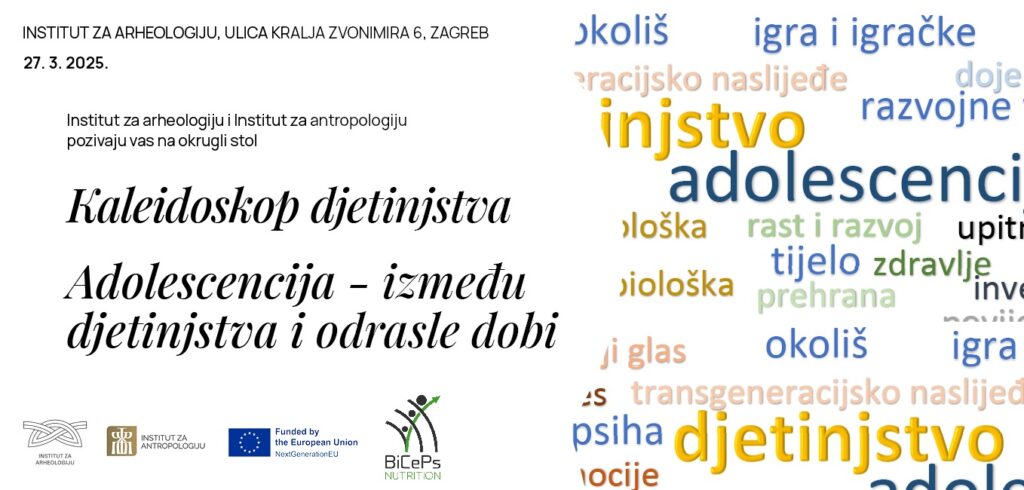
Scientific Conference “Kaleidoscope of Childhoods - Research Perspectives in Croatia” (15-16.2.2024)
The scientific conference “Kaleidoscope of Childhoods – Research Perspectives in Croatia” was held in Zagreb on 15 and 16 February 2024, co-organized by the Institute of Archaeology and the Institute of Anthropology. The conference brought together experts from various scientific disciplines involved in research on children and childhood. The conference was organized by Dr. Matea Zajc Petranović and Dr. Petra Rajić Šikanjić, who then publicly presented the project “Biological, sociocultural and psychological determinants of nutritional status until adulthood” (BiCePs_Nutrition).